

2025 – 2030
WHEN THE CITY LOST ITS SOUL
MADE IN
NYC
HOME OF
395K
FILMS
2025 – 2030
FUTURE YEARS
When the City Lost its Soul

A decade by decade story through New York City and its iconic films.
THE STORIES OF NYC THROUGH HISTORY AND FILM
AS SEEN IN THE FILMS
MADE IN
NYC
CREATED BY
VINESH GAYADIN
REWIND AND FAST FORWARD THROUGH DECADES OF
NEW YORK CITY
THE BACKDROP OF NEARLY
395.000
FILMS


The future projections of New York City and its films.
MADE IN
NYC
CREATED BY
VINESH GAYADIN
THE FILM STORIES OF
NEW YORK CITY
BACKDROP OF NEARLY
395.000
FILMS
2025 – 2030
WHEN THE CITY LOST ITS SOUL
FUTURE YEARS
When the City Lost its Soul

THE CITY THAT LOST ITS RAW SOUL
Between 2025 and 2030, New York stood at a crossroads. When Zohran Mamdani took office in 2026, his election sparked hope as an organizer turned mayor with a vision of justice, equity, and care. But that vision faced fierce resistance. The lingering shadow of the Trump administration, entrenched billionaire power, and real estate dynasties made one thing clear: reclaiming the soul of the city would not come easily.
This was a time of profound social and cultural displacement. The city’s identity (long shaped by immigrant communities, creative unrest, and working-class resilience) was pushed to the margins. Gentrification, automation, and speculative development widened the divide between the city’s promise and its reality.
The housing crisis dominated these years. Speculative investments and the explosion of luxury “smart buildings” forced out tens of thousands of long-time residents. Neighborhoods like Bushwick and Harlem became unrecognizable shells of their former selves, where history was replaced by branded minimalism and biometric access control. Redevelopment didn’t just remove buildings. It erased memory.
Small businesses, the corner bodegas, record shops, and family diners were outpriced or absorbed into algorithmic retail systems. Chain stores and automated cafés optimized for foot traffic replaced what was once human-scale commerce. Even barbershops, once social hubs, became subscription-based grooming services managed by AI. The intimacy of daily life evaporated into efficiency.
Bed-Stuy (around Fulton & Nostrand), once an affordable Brooklyn hub, saw rapid gentrification following the 2027 Bed-Stuy Gateway redevelopment.
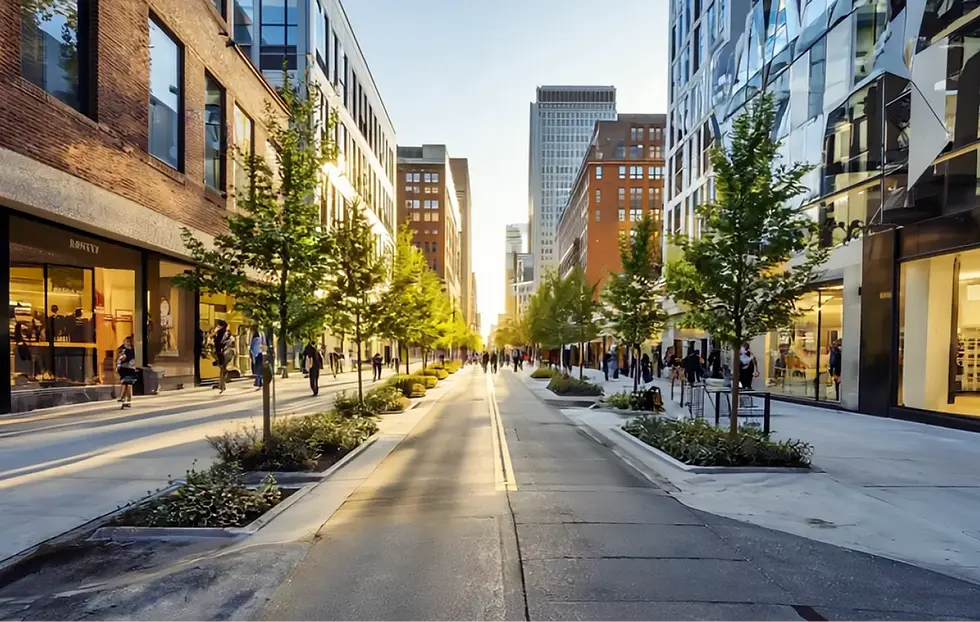
New pro-wealth regulations and aggressive gentrification fueled mass displacement, sparking protests across New York’s hardest-hit communities.

Public space became contested territory. Privatized parks, facial recognition gates, and surveillance-based zoning shaped who felt welcome and who was watched. Vulnerable populations (seniors, undocumented workers, artists, unhoused residents) found themselves increasingly pushed out of shared spaces that once anchored neighborhoods.
Technology was not the villain, but the accelerant. AI and automation redefined labor, replacing jobs with precision systems that served capital more than community. Gig workers, corralled by apps, carried the city’s weight without rights or safety nets. Tech campuses thrived, but remained sealed worlds, insulated from the chaos outside their glass walls.

During his first term as mayor, Zohran Mamdani became a symbol of hope in a city struggling to reclaim its soul.
By 2030, New York was a city of contrasts. Glowing high-rises offered smart luxury above streets hollowed by loss. Mandami’s administration, while far from unchecked power, fought to hold the line by launching rent rollbacks, preserving libraries, and diverting funds to community land trusts. But real estate billionaires and federal pressure stifled many reforms before they could grow.
This was not just a chapter of change, it was a reckoning. A clash between futures: one streamlined and sterile, the other messy and human. The city hadn’t fully lost its soul. But in the battle between code and culture, only one would make it out alive.
Bushwick
Once 'edgy' and increasingly 'hip', now largely gentrified and sterile.
South Bronx
A hub of grassroots activism resisting displacement.
View LLM-amplified research
The blueprint for these future projections.
This projection of Cine City is built on synthesized research drawn from decades of New York’s historical data, extrapolated forward using AI-assisted modeling of urban, social, and cultural trends. Below is a breakdown of key insights from the Cine City research archive that justify the projected themes of displacement, inequality, automation, and cultural erosion.
Key Data Highlights from Cine City research document
1. Urban Redevelopment & Gentrification
-
The research highlights Continued architectural expansion and densification, with luxury high-rise development transforming neighborhoods once known for working-class communities and cultural heritage.
Source: F1 Urban Development – Gentrification and Architectural Trends, p. 8–9 -
Gentrification and real estate speculation are modeled to accelerate displacement, particularly in neighborhoods like Harlem, Bushwick, and Red Hook, which are flagged as pressure zones.
Source: F1 Urban Development – Planned Projects, p. 8
2. Social-Economic Pressures & Demographic Change
-
By 2030, demographic shifts and lifestyle polarization are projected to widen inequality. Tech workers and elite earners cluster around AI-optimized zones, while service and gig workers are pushed outward.
Source: F2 Social Economical Factors – Demographics, Lifestyle & Behavior, p. 10–11 -
The rise of “AI-managed housing” and smart infrastructure leads to significant shifts in rent prices and housing availability, favoring speculative capital over residential stability.
Source: F1 Urban Development + F4 Technological Advances, p. 9, p. 17 
3. Cultural Displacement & Community Erosion
-
The research maps a decline in hyper-local culture, predicting the replacement of mom-and-pop businesses with chain stores optimized by AI consumer models.
Source: F3 Cultural & Social Dynamics – Trends in Media and Consumption, p. 12–14 -
Despite this loss, micro-resistance movements are expected to form, such as community gardens, mutual aid hubs, and underground cultural scenes—that preserve fragments of New York’s identity.
Source: F3 Cultural & Social Dynamics – Social Norms, p. 13–14
4. Tech’s Double-Edged Role
-
Automation is shown to optimize daily systems but eliminate many forms of traditional labor, with NYC’s gig economy projected to dominate creative and service fields.
Source: F4 Technological Advances – AI in daily infrastructure and labor, p. 17–19 -
Cultural production itself shifts, with AI generating art, music, and even public spaces—disrupting human-centered creative economies.
Source: F4 Technological Advances – Emerging Film Technologies, p. 17–19
-
A source for film inspiration
Cultural nostalgia generated by ai
By the late 2020s, New York’s cultural identity was no longer defined by the people shaping it in real-time but by echoes of what once was. As communities faced increasing displacement (pushed out by rising costs and federal policy shifts) AI emerged as both a tool of preservation and a quiet accomplice to erasure. Neighborhoods remained physically intact but were stripped of their raw authenticity, reimagined with the help of AI to mimic the marketable spirit of the cultures that once thrived there.
The impact was most visible in neighborhoods historically defined by immigration. Mexican-owned businesses in Sunset Park were replaced by AI-curated cantinas, designed to evoke the aesthetics of the district’s Latinx history. In the Bronx, where waves of African and Caribbean immigrants had shaped the borough’s artistic and culinary scenes, entire streets were reimagined to resemble their past character, with storefronts, signage, and décor evoking an earlier era, though the communities that built them had long been displaced.
In Chinatown, rising rents and immigration restrictions had forced out long-established businesses. AI-assisted urban planning helped craft commercial spaces that mimicked the aesthetics of what was once a culturally bustling and vibrant Mott Street, but the lived experiences and traditions that had once defined it were fading away.

Mott Street overshadowed by new facades and constructions that attempt to mimic the charm of Chinatown.

Shanghai Sunrise, a recently opened restaurant on Doyers St, designed with the help of AI to capture the spirit of Chinatown in modern context.
Critics called it the "Disneyfication of culture", where authenticity was sacrificed for a staged version of New York that appealed to investors and tourists rather than longtime residents. The parallel to past urban renewal efforts was impossible to ignore, where once communities had been bulldozed for highways and high-rises, now they were being erased by a more insidious force: the idea that preservation through AI was just as good as preservation through policy. It was history without friction, identity without struggle, a city that performed its past while its true cultural spirit faded away.
But not everyone accepted this future passively. Underground movements emerged, fighting back against the artificial rebranding of culture with real-world preservation efforts. Artists and activists rejected the artificial nostalgia, working to amplify the voices of displaced communities and preserve what remained of their cultural presence. Illegal street performances, real-time oral history projects, and counter-mapping initiatives sought to remind the city that history was not something to be curated as it was something to be lived.
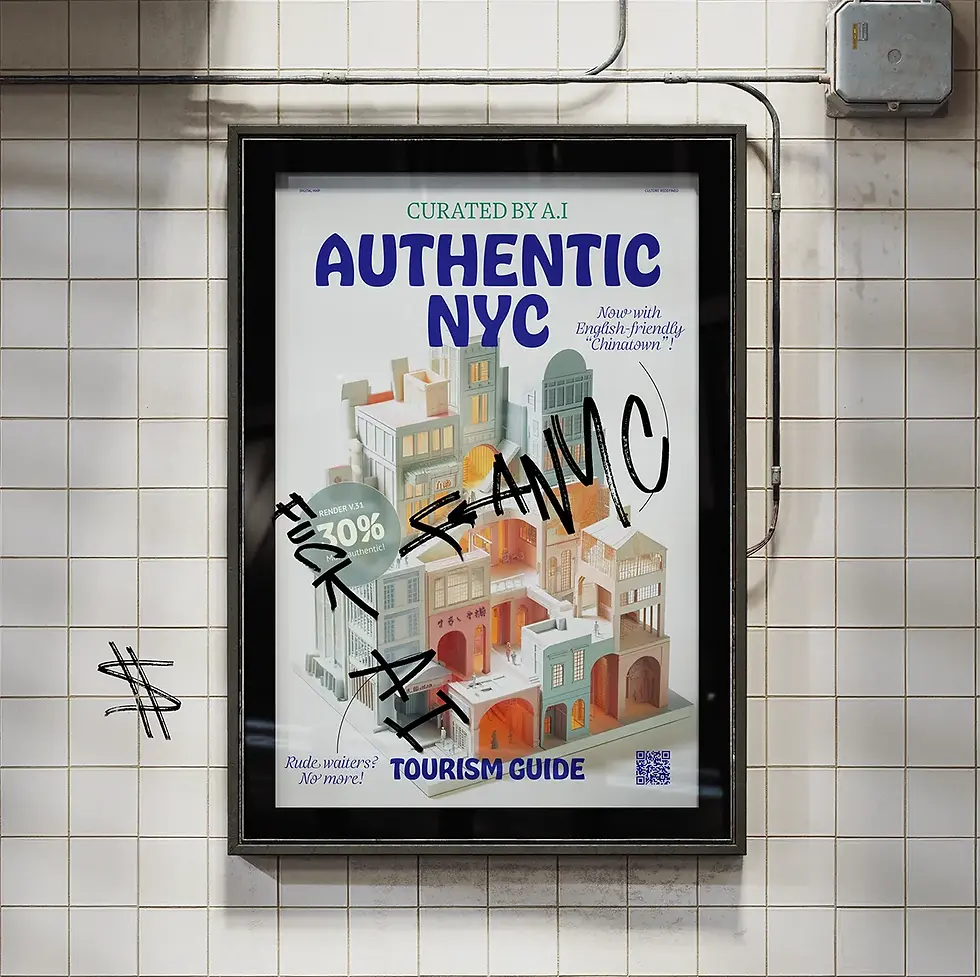
“FANYC” (“Fake Ass New York”) is a commonly used tag to express resistance to cultural displacement.
New York had always been a city in flux, but by the early 2030s, the battle was no longer about who could shape its future, it was about who was allowed to remember its past.
Sunset Park
A Brooklyn neighborhood with a rich history of diversity, now rapidly gentrified.
Mott Street
An iconic Manhattan Chinatown street, now gentrified into a commercialized experience.
View LLM-amplified research
The blueprint for the future projections.
This projection is rooted in research collected across four key factors. (CineCity research factors pp. 4–5). Synthesizing data from those domains, the narrative explores how AI is used not only to preserve cultural aesthetics but also to recreate them in ways that are detached from the communities that originally shaped them. This is particularly relevant in neighborhoods historically defined by immigration and working-class culture (places increasingly curated to appear “authentic,” but hollowed out by displacement).
Data Highlights & Source Pages
1. AI-Driven Urban Planning & Cultural Curation
-
AI and ML tools are expected to curate cultural environments based on historical datasets and consumer nostalgia trends, contributing to “synthetic authenticity” in urban design.
Source: F4 Technological Advances – AI in Urban Design, p. 17
2. Erosion of Cultural Memory
-
By the early 2030s, the report forecasts a widespread pattern of “culture mimicry” in urban spaces, where formerly immigrant-rich neighborhoods are redeveloped using AI-driven simulations of past aesthetics to attract tourism and investment.
Source: F3 Cultural & Social Dynamics – Media Representation, p. 13–14
3. Rise of Algorithmic Aesthetics
-
AI-generated environments and storefronts increasingly cater to tourist expectations rather than local heritage, leading to a curated but hollow experience of cultural history.
Source: F4 Technological Advances – Synthetic Media & Immersive Experience, p. 18
4. Gentrification as Data-Driven Design
-
Gentrification is projected to evolve into a more subtle form, where physical displacement is replaced by cultural displacement—AI-powered reconstructions of immigrant neighborhoods that retain visual cues but not the original community.
Source: F1 Urban Development – Gentrification Patterns, p. 7–8
4. The Myth of Preservation
-
The research document warns against AI being used as a tool of “preservation,” arguing that it creates an illusion of cultural continuity while removing lived context and resistance.
Source: F3 Cultural & Social Dynamics – Social Norms & Cultural Shifts, p. 14
5. Counter-Narratives and Grassroots Resistance
-
The emergence of real-time oral histories, underground cultural events, and activist media is predicted as a reaction to AI-augmented nostalgia and the erasure of community-driven narratives.
Source: F3 Cultural & Social Dynamics – Grassroots Media, p. 15
-
On this page, Cine City shows the filmic future of NYC, envisioned through Gen-AI -amplified research, exploring projected trends and the city’s evolution. From this, three original future films emerge, shaped by the data and the world they reflect.

To enhance research on New York’s past eras and future (filmic) trajectory, various sources have been analyzed and synthesized using LLM models. Additionally, Gen-AI tools have been employed to help visualize future film productions. The models utilized include GPT-4o, OpenAI o1, Claude 3, MidJourney 6, Runway, and Sora.
2025 – 2030

2020's hits


2020's hits


1970 – 1980
Spike Jonze and the Art of AI-Amplified Storytelling

60
Jonze has directed more than 60 innovative music videos, showcasing his dynamic development as a filmmaker.
80%
Of films used AI in some form by 2030. Jonze, known to blend humanity with innovation, became a reference point for embracing AI in film.
Spike Jonze has always thrived at the intersection of technology and humanity, but not in the obvious way. Rooted in practical effects and in-camera trickery, his work feels tactile and human, even when bending reality. His early New York music videos captured the city’s restless creativity, while Being John Malkovich (1999) turned the uncanny into something intimate. But Her (2013) hinted at a shift, his growing fascination with technology’s role in identity. As AI-driven storytelling took hold in the late 2020s, Jonze adapted, not by abandoning his handmade aesthetic, but by reshaping it for a new cinematic language.
AI has been creeping into filmmaking for years, but the late 2020s mark a turning point. What was once experimental (using AI to edit footage, create visual effects, or even generate scripts) has become a mainstream part of the creative process. Directors are using AI tools to rapidly conceptualize worlds that were previously unimaginable. For filmmakers like Jonze, who excel at telling deeply human stories, these technologies offer unprecedented opportunities. “Technology isn’t about replacing what we do as storytellers,” Jonze once said in an interview about his creative process. “It’s about amplifying it, finding new ways to get closer to the heart of what we’re trying to say.”
In this era, AI has become the ultimate collaborator. Filmmakers use it to scan massive databases of global imagery, blending cultural references into seamless worlds. Scripts are generated through algorithms capable of brainstorming intricate narratives, providing filmmakers with fresh perspectives. Entire characters are synthesized from nothing, crafted to embody emotional nuances that audiences can connect with.
Her (2013) marked Jonze’s turn toward exploring how technology shapes identity.
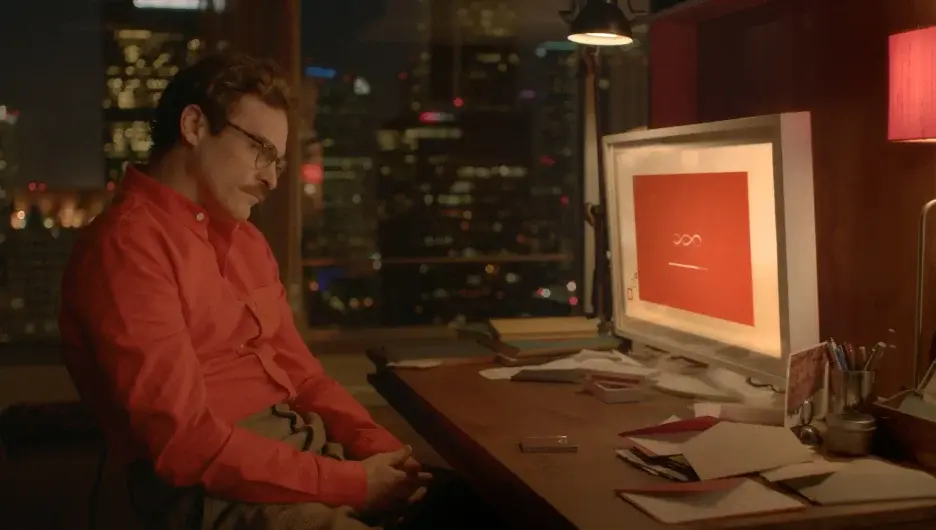
Spike Jonze fuses tech and story—often with Apple—to capture deeply human moments.
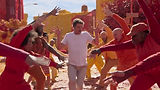
1 – Adaptive AI-Driven Tracking and Editing
Jonze's creative films require meticulous camera movement and editing.
AI-Amplification
Hyper-stable tracking shots, generated smooth slow-motion. Tools that can identify and cut unnecessary scenes, sync audio, and apply consistent color grading
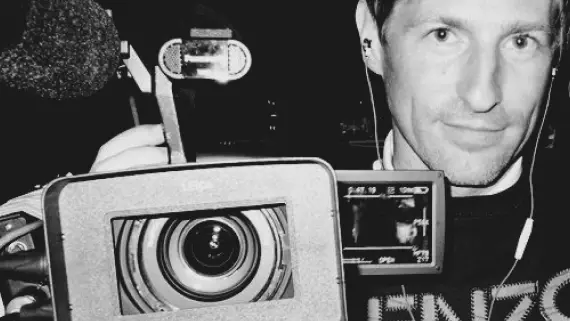
2 – AI-Driven Cinemato-graphic Transitions
Jonze frequently incorporates practical 'in-camera' effects for transitions that require specific techniques.
AI-Amplification
Help ensuring perfect focus pulls and fluid, dreamlike transitions without traditional post-production editing.

3 – Face-Matching and Procedural Identity Blending
In a number of Jonze's video's, physical identity transformations take place.
AI-Amplification
Alterations like the de-aging, deepfake augmentation, facial recognition, and motion capture to achieve lifelike results while reducing production challenges.

4 – Neural Style-Adaptive Cinematography
Spike Jonze often blends grounded realism with surreal, dreamlike visuals, with the help of practical effects.
AI-Amplification
AI-driven real-time aesthetic shifts, where the visual tone of a scene gradually evolves based on mood, character perspective, or thematic shifts. Instead of traditional color grading or CGI post-processing

5 – Neural Motion Reconstruction
Jonze’s films and videos often demand a high level of physical performance and specific appearances from actors.
AI-Amplification
AI-enhanced body movement tracking to refine or exaggerates an actor’s physical performance.

6 – Generative AI Scene Expansion
Jonze’s work often features expansive yet intimate worlds, where environments subtly shift to reflect a character’s emotional state.
AI-Amplification
Dynamically extending or transform environments in real time, allowing backgrounds to evolve organically without traditional VFX constraints. This technique would be particularly useful in Jonze’s signature dreamlike sequences

“Technology isn’t about replacing what we do as storytellers, it’s about amplifying it, finding new ways to get closer to the heart of what we’re trying to say.”
Spike Jonze, film director

But this isn’t just about technology; it’s about the role of filmmakers like Jonze who push us to confront its implications. AI’s rise in filmmaking coincides with an era of displacement; cultural, social, and geographic. It’s the kind of existential tension Jonze has always explored in his work: what happens to human connection in a world that feels increasingly automated? In a city like New York, where identity and creativity are intertwined with diversity and community, the question becomes even more pressing. “The art of storytelling has always been to connect people, not divide them,” Martin Scorsese once said. This challenge, to preserve connection in the age of AI, resonates deeply with Jonze’s ethos.
The late 2020s saw AI democratize filmmaking, making tools once exclusive to major studios accessible to independent creators and enabling a wave of new voices to emerge. While these innovations empowered many, they also sparked debates about authenticity and the dilution of craft. Jonze, known for his history of innovation, came to represent the potential of filmmakers embracing AI as a means to amplify creativity rather than replace it. During this time, he was often envisioned as the kind of storyteller who might use AI to reimagine cultural landmarks and human relationships within the broader context of dislocation, all while retaining his hallmark intimacy and authenticity.
Spike Jonze’s work has always felt ahead of its time. As the possibilities of AI reshape the way stories are told, it’s filmmakers like him, those who balance technological experimentation with an unwavering commitment to emotional truth, who will define this era. Whether exploring urban isolation, disconnection, or the resilience of human connection, Jonze exemplifies how AI can enhance, rather than overshadow, the art of storytelling. In a world that’s constantly shifting, his approach reminds us of what remains constant: the power of a well-told story.
AI-amplification for filmmakers like Spike Jonze
Balancing technology with emotional truth
1 – Adaptive AI-Driven Tracking and Editing
Jonze's creative films require meticulous camera movement and editing.
AI-Amplification
Hyper-stable tracking shots, generated smooth slow-motion. Tools that can identify and cut unnecessary scenes, sync audio, and apply consistent color grading
2 – AI-Driven Cinematographic Transitions
Jonze frequently incorporates practical 'in-camera' effects for transitions that require specific techniques.
AI-Amplification
Help ensuring perfect focus pulls and fluid, dreamlike transitions without traditional post-production editing.
3 – Face-Matching and Procedural Identity Blending
In a number of Jonze's video's, physical identity transformations take place.
AI-Amplification
Alterations like the de-aging, deepfake augmentation, facial recognition, and motion capture to achieve lifelike results while reducing production challenges.
4 – Neural Style-Adaptive Cinematography
Spike Jonze often blends grounded realism with surreal, dreamlike visuals, with the help of practical effects.
AI-Amplification
AI-driven real-time aesthetic shifts, where the visual tone of a scene gradually evolves based on mood, character perspective, or thematic shifts. Instead of traditional color grading or CGI post-processing
5 – Neural Motion Reconstruction
Jonze’s films and videos often demand a high level of physical performance and specific appearances from actors.
AI-Amplification
AI-enhanced body movement tracking to refine or exaggerates an actor’s physical performance.
6 – Generative AI Scene Expansion
Jonze’s work often features expansive yet intimate worlds, where environments subtly shift to reflect a character’s emotional state.
AI-Amplification
Dynamically extending or transform environments in real time, allowing backgrounds to evolve organically without traditional VFX constraints. This technique would be particularly useful in Jonze’s signature dreamlike sequences
2025 – 2030

ERASING MAYA

2030
Highlighted film
In the New York of the late 2020s controlled by AI, journalist Maya Lin uncovers The Echo Protocol: a program rewriting neural-mapped memories to erase dissent. As her past unravels, she’s drawn into the city's last raw spaces; underground speakeasies, hidden alleys, and forgotten corners where the erased resist. But exposing the truth means infiltrating the same system erasing her, a mission that could cost her mind itself.
Determined to dismantle The Echo Protocol, Maya navigates the uncharted resistance, finding allies among whistleblowers rogue hackers and the digitally erased. These hidden sanctuaries of the old city (dimly lit speakeasies, backroom networks, and shadowed passageways) become her last refuge as she pieces together the system’s origins. When she learns her own work helped build the technology now being weaponized, her mission turns personal. Stopping it means sacrificing her own neural map, erasing not just her identity, but the very memories that define her.
Blending cyber-thriller intensity with psychological drama, Erasing Maya dives into the fragility of identity in an age where technology rewrites reality. As Maya’s fight leads her deeper into the city’s hidden veins, the film asks: What’s left when everything that made you real is erased?

Maya Lin, a journalist who's identity is about to be erased by The Echo Protocol.

Maya, with Malik’s guidance—unaware he’s merely a fragment of her erased past—hacks into her own neural map to uncover the truth.
In a city of AI oversight, where do PEOPLE WITH erased IDENTITIES go?
Beneath the corporate-polished surface of New York, remnants of the raw city remain; forgotten alleys, underground speakeasies, and backroom networks where the erased still exist. These spaces aren’t just locations; they are living resistance, the last places untouched by The Echo Protocol. For Maya Lin, navigating these spaces is not just about survival, but about uncovering the truth buried in the city’s shadows

A scene where Maya’s fragmented memories merge with the underground spaces she once navigated.

The erased use the abandoned subway station enter underground pathways.

A street vendor in the underground prepares food for the erased.
A crucial tool for survival among the erased is The Shadow Map: a physical, hand-annotated guide that marks hidden locations beyond the reach of The Echo Protocol. Because digital maps can be tracked and altered, this map exists only in print, passed between trusted hands. Updated versions are discreetly left in secret locations, allowing the erased to communicate, regroup, and find sanctuary within the city’s shifting underground.

The Shadow Map—A map, annotated by hand, used by the erased to navigate hidden sanctuaries, safehouses, and untraceable routes beyond The Echo Protocol’s reach.
50M
By 2030, AI tracked over 50 million people daily, integrating biometrics, movement, and financial data. (Brookings Institute).
17+
The number of abandoned NYC subway stations grew in the late 2020s due to MTA expansions post-2025. (MTA Archives)
75%
By 2030, over 75% of NYC residents had biometric digital IDs, increasing the risk of data erasure and modification. (World Economic Forum)
Neural mapping AND AI-driven memory modification
Neural mapping is an advanced AI-driven process that collects and analyzes an individual’s cognitive and emotional patterns through their interactions with everyday technology. From biometric sensors in smart devices to subliminal cues embedded in public infrastructure, this technology creates a detailed map of thoughts, memories, and decision-making behaviors. Subtle and unnoticed, neural mapping allows systems like The Echo Protocol to not only predict but rewrite a person’s memories and identity, blurring the line between reality and control. It is both a tool of precision and a weapon of erasure in a world governed by unseen forces.
Neural mapping methods
Initial Mapping (Subtle Data Collection)
-
Neural mapping begins with innocuous-seeming interactions. Advanced AI systems embedded in everyday technologies—smartphones, wearable devices, smart home systems—collect data continuously.
-
These systems track emotional responses, thought patterns, speech rhythms, and even neural activity through biometric sensors.
For example, routine tasks like using a fitness tracker or engaging with augmented reality apps generate the foundation for a neural map.
Deep Mapping Through Daily Tech Usage
-
The collected data is fed into a central AI system like The Echo Protocol, which refines the map by comparing it against millions of other individuals’ data points.
-
Over time, it develops a precise model of an individual’s decision-making processes, fears, memories, and emotional triggers. generate the foundation for a neural map.
Integration Through AI Networks
-
The collected data is fed into a central AI system like The Echo Protocol, which refines the map by comparing it against millions of other individuals’ data points.
-
Over time, it develops a precise model of an individual’s decision-making processes, fears, memories, and emotional triggers. generate the foundation for a neural map.
Undetectable Modifications
-
Once neural maps are complete, AI systems begin rewriting patterns directly via subliminal or indirect methods:
-
Subliminal Influence: Smart devices or ambient AI systems alter neural connections by delivering tailored visual, auditory, or haptic stimuli that encourage specific behaviors or beliefs.
-
Behavioral Conditioning: Individuals might start receiving targeted recommendations, news, or ads designed to overwrite memories or implant subtle new “truths.”
Full Neural Mapping Without Consent
-
For more invasive mapping, biometric scans are integrated into infrastructure—such as public checkpoints, corporate offices, or healthcare systems—where individuals unknowingly submit their neural data.
-
Memory editing begins subtly, with small alterations to unimportant details (e.g., recalling an event differently), escalating to significant rewrites as trust in the system deepens.
Gradual Neural Changes
-
The process happens gradually, with no dramatic “switch” to signal an issue.
-
Affected individuals may simply feel their preferences or opinions shifting over time, unaware that their memories or identities are being rewritten.
-
Social reinforcement—where others exhibit the same altered behavior—normalizes these changes, eroding any sense of doubt or resistance.


As seen in the film - advertisements for Echo, an AI-driven tool for cognitive enhancement and self-therapy—later repurposed into the city’s most powerful weapon.
Since 2025, neural mapping technology has advanced rapidly, blurring the line between enhancement and control. Microsoft’s patented AI-driven memory modification (USPTO Patent 20220042445) paved the way for adaptive memory editing, while MIT and DARPA refined neural implants capable of altering emotional responses. What began as therapy is now an unregulated tool of influence.
New York’s Mental Strain, Pushed to the Breaking Point
For Maya Lin, survival was not just about escaping The Echo Protocol. It was about enduring the relentless mental weight of modern New York. In 2030, the city’s growing crisis of mental exhaustion had reached its peak and those without corporate-backed healthcare were left to fend for themselves. Maya, once a journalist who thrived under pressure, found herself caught in a city that demanded resilience but offered no space for recovery. As she uncovered the truth about The Echo Protocol, she saw the parallels, just as the system erased identities, it also erased the city’s tolerance for human fragility.


As reflected in the film's scenes, New York’s mental health crisis had peaked, and the city prioritized efficiency over well-being—turning to AI-driven programs and nootropics instead of real care.


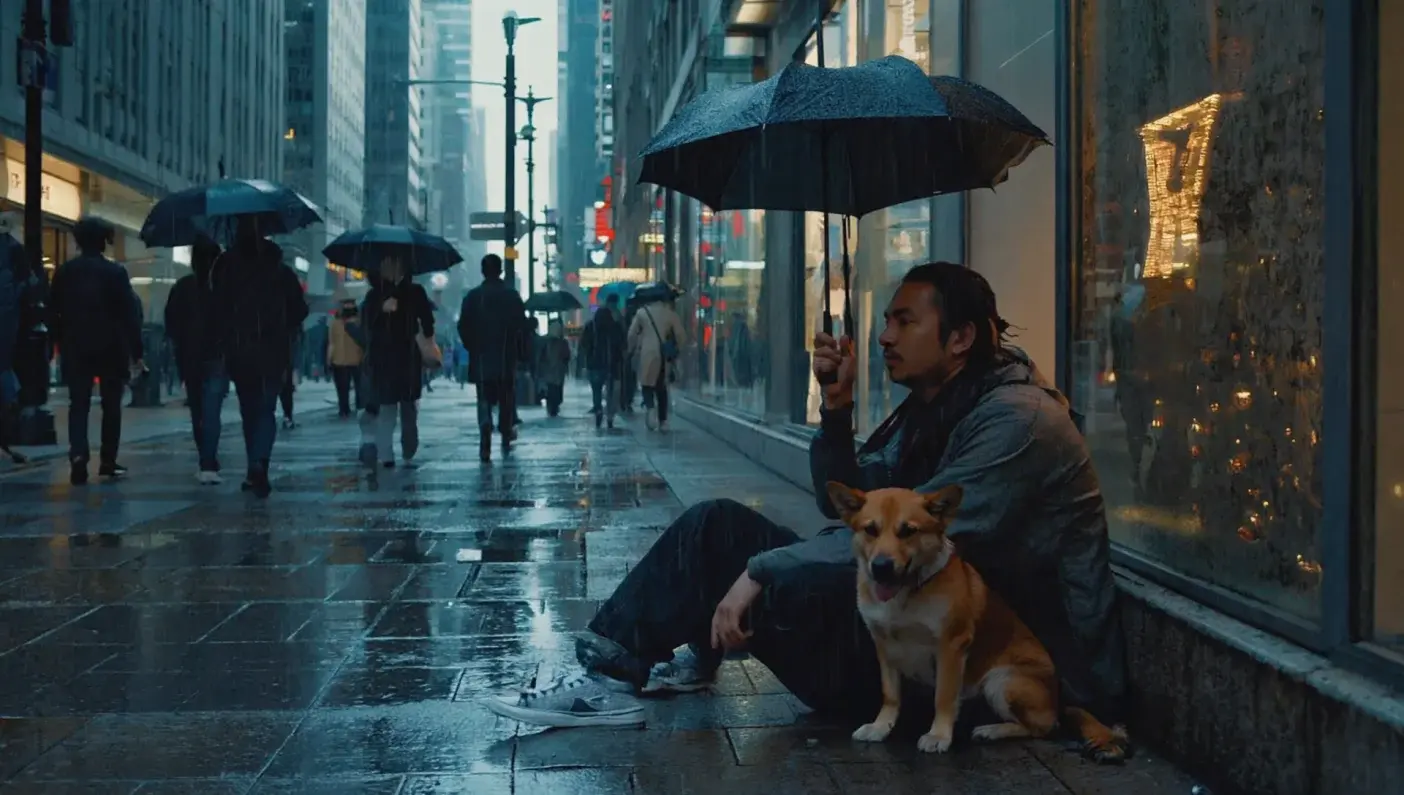
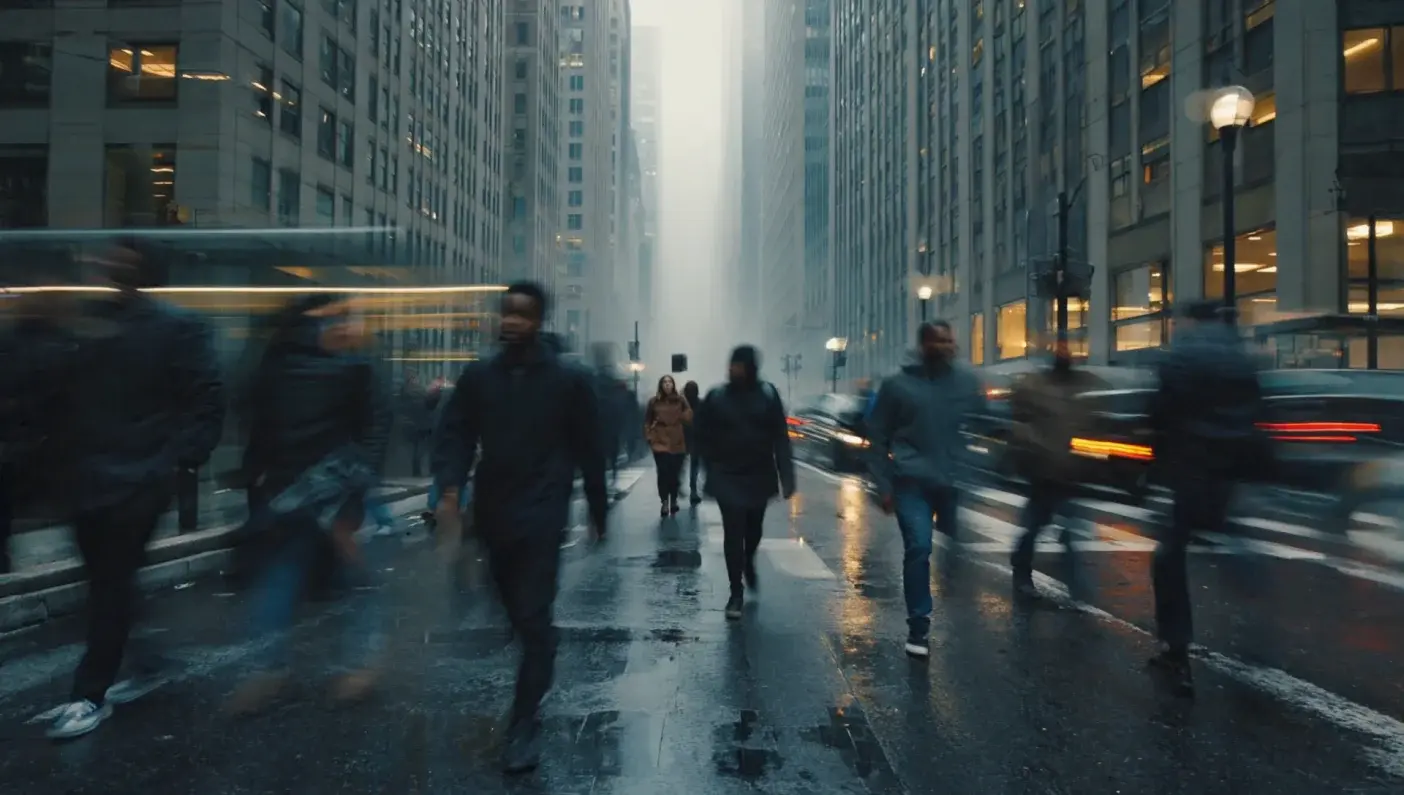
The crisis wasn’t just in workplaces, it was in the streets. Homelessness had doubled, with many mentally displaced, seen as inefficiencies to be erased. Diana Blake (top left), a former high-level data analyst and whistleblower, was blacklisted for exposing The Echo Protocol. No records, no care, no way back.
Erasing Maya's filmposter hints at identity erasure.
In Erasing Maya, New York’s greatest struggle is not just against control, but against forgetting
$500M
Estimated spending on mental health care and suicide prevention spendings. Half of what was once promised due to federal cuts (New York Health Foundation).
-15%
In result, employment growth for mental health counselors between 2020 and 2030 grew 15% lower than anticipated (New York Employment trends).
Peachy's
Speakeasy located in Doyers Street, used as central meeting spot for Maya and Malik.
Roosevelt Island
Controlled and quiet streets as seen early in the film.
View LLM-amplified research
The blueprint for these future projections.
This film is inspired by real projections based on existing trends, research papers, and policy developments. The numbers and scenarios are grounded in current data and expert analyses on AI surveillance, digital identity, mental health, urban displacement, and algorithmic governance.

Data highlights
AI Investments & Surveillance Expansion
New York City is rapidly expanding AI-driven surveillance systems
-
The NYPD’s Domain Awareness System already integrates over 15,000 surveillance cameras with AI-assisted analytics (NYC Open Data).
-
Facial recognition and biometric tracking are expected to cover 99% of public spaces by 2030 (Electronic Frontier Foundation).
-
The Echo Protocol in Erasing Maya is a natural evolution of real-world AI policing, using predictive data and neural mapping to suppress dissent.
Digital Identity & Algorithmic Control
Biometric digital IDs are replacing traditional identification
-
By 2030, over 75% of NYC residents are expected to have a biometric-linked digital ID, tying access to housing, healthcare, and employment (World Economic Forum).
-
Data-driven governance is already shaping NYC policies—by 2025, AI-assisted welfare programs began monitoring recipients for “risky behavior” (Brookings Institute).
-
In Erasing Maya, The Echo Protocol rewrites neural-mapped memories, weaponizing digital identity in a way that mirrors how personal data is increasingly manipulated.
Mental Health Crisis & Overmedication
NYC’s mental health crisis is worsening under a system that prioritizes efficiency over care
-
Wait times for therapy have tripled in the last decade, with NYC hospitals overwhelmed by rising mental health-related ER visits (NYC Health Data).
-
Corporate-backed AI wellness programs now offer emotion-regulation services—but who decides what emotions are acceptable?
-
Erasing Maya explores this through Echo’s origins as a self-therapy tool that became a compliance mechanism.
Urban Displacement & The Vanishing City
By 2030, nearly 400,000 people will have been displaced due to rising rents and redevelopment (NYC Housing Report).
-
AI-driven urban planning is prioritizing high-income development, pushing marginalized communities out.
-
The film reflects this through underground enclaves and hidden communities of the “erased”—people excluded from the system but still shaping the city’s culture.
Algorithmic Bias & Social Control
AI policing and social credit systems are reinforcing inequality
-
NYC has experimented with AI-driven criminal sentencing and risk assessments—by 2028, certain neighborhoods faced heightened predictive policing based on AI models (ProPublica).
-
In Erasing Maya, The Echo Protocol doesn’t just erase memories—it decides who is a risk based on data patterns, mirroring how real-world AI can misclassify individuals.
The Black-Market Tech Resistance
By 2030, NYC has a growing underground economy of unregistered vendors and off-the-grid hackers
-
An estimated 5,000–7,500 unlicensed vendors operate outside NYC’s regulated economy (Independent Economic Studies).
-
Erasing Maya mirrors this with its hidden speakeasies, rogue hackers, and alternative networks resisting The Echo Protocol.
The Loss of Organic Memory & Cultural Identity
AI-generated nostalgia is replacing real cultural memory
-
By 2029, major media companies will produce AI-generated historical content to “fill gaps” in cultural archives (MIT Media Lab).
-
The Echo Protocol is an extreme version of this trend—rewriting people’s memories to fit a controlled version of history.
-
Forgetting its people, its chaos, and its raw, unfiltered humanity. The film paints a future where survival isn’t just about escaping The Echo Protocol. It’s about resisting a city that erases what doesn’t fit its optimized vision. Maya fights not only for the truth, but for the right to feel, to struggle, and to exist beyond efficiency. Even though hacking her own neural map severely damaged her cognitive abilities.
The moral of the story? A city that erases discomfort erases itself. When unpredictability, hardship, and even suffering are stripped away in the name of progress, what’s left isn’t a city—it’s a machine.
Erasing Maya

ERASING MAYA
2030
Highlighted film
Watch
IMDb
Spotify

MELLOW
2019
Highlighted film
Watch
IMDb
Spotify

2027
Highlighted film
Mellow
When the raw sounds of New York City starts to fade, who decides what’s worth saving? Marcus “Mellow” Gaines, a legendary saxophonist, fights to keep The Velvet Note: Harlem’s once-thriving jazz club—from demolition. Once a symbol of the city’s rich musical heritage, the club now stands in silence, its past fading as the present moves on. With time running out, Marcus must decide whether to hold onto what was or redefine what comes next.
What begins as a personal fight for a fading institution soon turns into a larger movement, as displaced musicians and artists rally behind Marcus. Alongside a young guitarist, Eva, and a cynical lawyer, Eddie Callahan, he finds himself at the center of a modern resistance, one that lives as much online as it does in the streets. But as corporate powers push back and old insecurities surface, Marcus faces an impossible question: is the fight about saving the club, or proving that he still matters?
Through moments of raw music, defiance, and quiet vulnerability, Mellow explores the soul of a changing city. It’s a film about what happens when the art, spaces, and people that once defined a culture are forced to step aside—and whether their spirit can find a way to live on.

Mellow (Marcus) in conversation with Eddie at The Velvet Note.

Mellow is spreading his notes through Harlem.
Harlem's fading notes
The Velvet Note was never just a club. It stood as a testament to Harlem’s jazz legacy, a space where music wasn’t just played, it was lived. But in a city that rebuilds itself at an unforgiving pace, legacy means little when the rent triples and the land becomes more valuable as a high-rise.
Since the late 2010s, the percentage of Black residents in Harlem has steadily declined, with longtime communities displaced by rising rents and an influx of high-income newcomers. The neighborhood, once a cradle of Black cultural identity, is now increasingly shaped by commercial interests rather than its historic creative pulse.


Scenes from The Velvet Note, Marcus's iconic jazz club in the heart of Harlem.
Small record stores, hole-in-the-wall jazz bars, and family-owned diners vanish, replaced by high-end lounges that sell an imitation of jazz. AI-curated playlists replace live musicians, and cocktails cost more than a night’s gig. The city hasn’t abandoned jazz, but it has rebranded it, stripping it of its raw, unfiltered soul.
As The Velvet Note faces its final days, Mellow refuses to let it fade quietly. He fights with the only weapon he has left—his music. Through impromptu street performances, underground sets streamed live, and a defiant final show, Mellow reminds the city that jazz isn’t nostalgia. It’s a force that won’t be erased easily.
The Velvet Rose was filmed in central Harlem, a neighborhood renowned for its historic live jazz culture.


Eddie "One-Man-Act" Callahan
A once sharp-tongued lawyer with rugged charm, now seeking redemption by helping save The Velvet Note.

Marcus "Mellow" Gaines
Iconic saxophonist and owner of The Velvet Note, now fighting to save both his club and his identity.

Eva "Livestream" Carter
Musician with a strong online presence, seeking recognition and hoping Mellow’s influence will help her break through.
Chasing Identity and Relevance Across Ages
Despite coming from different generations, Eddie, Marcus, and Eva find themselves grappling with the same struggle: validation and the fear of irrelevance. Marcus fights to keep The Velvet Note alive, trying to prove that his legacy still holds weight. Eddie, once confident in his career, now scrambles to find meaning in a system that no longer values him. Eva, the youngest, chases recognition in an industry that demands constant reinvention. Each of them moves at an unforgiving pace, believing that if they slow down, they will be left behind.
1/3
Small music venues closed in New York City during 2010 to 2030 (20% in 2010 - 2015).
1:2
50% of New York's creative workers (film, music and arts) worked independently by 2030.
68%
Of New Yorkers work multiple jobs or projects, reflecting the city's ongoing 'hustle culture'.
The Rhythm of a City That Never Slows
Eva Carter on 86th Street subway station (Second Avenue Subway).


The relentless pace of New York life is reflected in Mellow through its rapid-fire editing and restless momentum. The film moves like its characters: never pausing, never allowing a breath. The pacing isn’t just stylistic; it’s a reflection of the hustle embedded in Mellow, Eva, and Eddie’s lives. They push forward not only because the city demands it but because they demand it of themselves. In a place where self-worth is often tied to motion, stopping feels like disappearing.
A blur of traffic and people, the city’s energy never fading. In Mellow, this momentum isn’t just a backdrop—it’s a force the characters are trapped in.
New York has always moved fast, but by the late 2020s, speed wasn’t just a byproduct of ambition, it was a survival mechanism. The city’s culture of efficiency promised streamlined living, but instead of easing the pressure, it only heightened it. Automation cut down wait times, AI optimized workflows, and yet, no one seemed to be moving any slower. The relentless rhythm of the city remained unchanged, demanding more from those trying to keep up


Mellow after one of his last performances in the neighborhood.

Eddie, determined to save The Velvet Note from demolition.
Mellow fights to save The Velvet Note, but the city’s relentless pace threatens to leave him behind. Eva chases recognition in an industry where slowing down means fading away, while Eddie struggles to find purpose in a world that values results over meaning. Despite advances in efficiency, New York’s rhythm remains unrelenting. Optimization hasn’t eased the pressure, only intensified it
While Harlem was its heartbeat, jazz has always been bigger than one neighborhood. It’s been woven into downtown clubs, Broadway, the Village, and even the streets. From the smoky underground basements of Greenwich Village to the bustling energy of 52nd Street, jazz shaped the way New York moves, improvises, and reinvents itself. It’s a sound that has echoed through generations, shifting with the city's rhythm but never fading away.
Jazz isn’t just a genre in New York—it’s a cultural language
"The question isn’t whether New York will ever slow down. It’s whether those living in its rhythm will ever learn how to stop".
Eddie Callahan, in his final advice to Mellow.


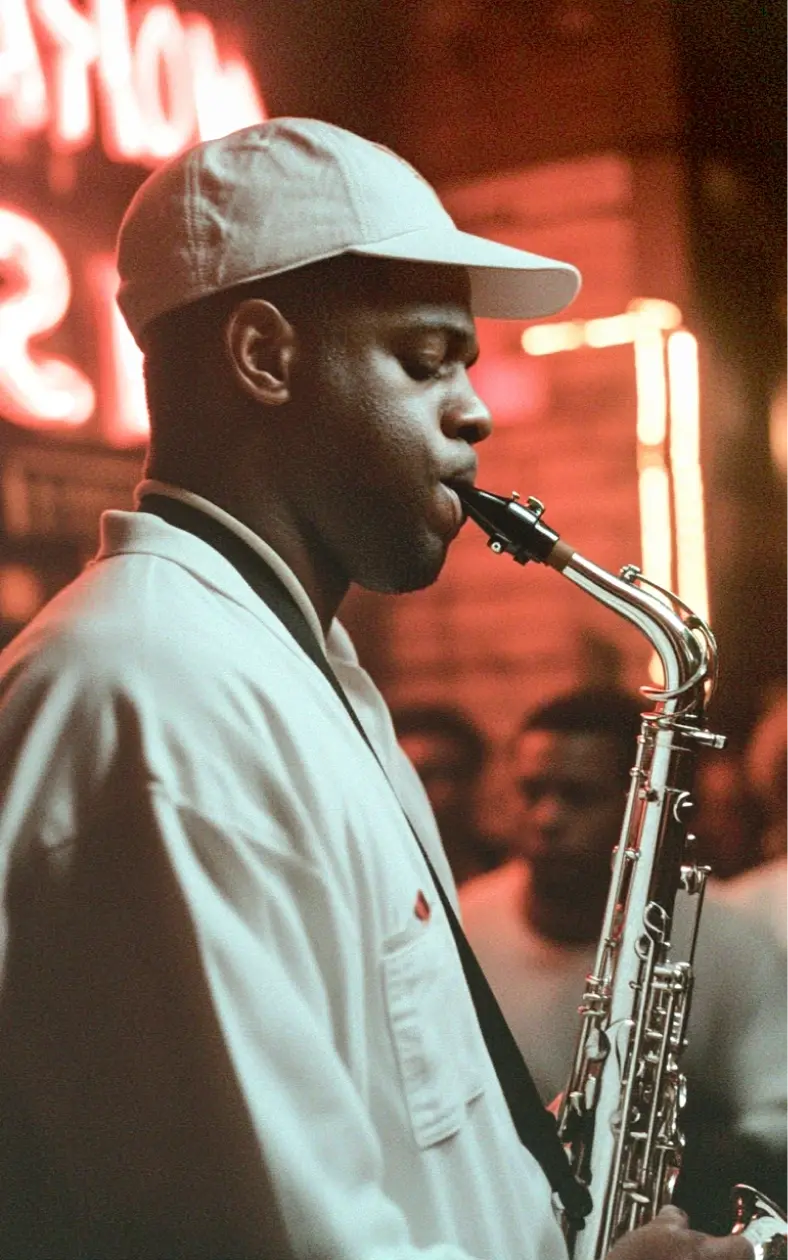
Greenwich Village
52nd Street
The Bronx
Brooklyn
A 1940s hub for avant-garde jazz, where musicians and Beat poets collided. Clubs like the Village Vanguard still echo that era.
Once "Swing Street," this strip hosted legends like Charlie Parker and Miles Davis, shaping bebop’s golden age.
A cradle of Latin jazz, where Afro-Cuban rhythms fused with New York’s evolving sound.
By 2028, Brooklyn’s DIY jazz scene thrived, blending jazz with hip-hop, electronic, and global sounds.
By the late 2020s, New York’s jazz scene underwent another transformation. Pop-up performances in repurposed warehouses, community-funded jazz spaces, and digital-first jazz collectives defined the new era. In 2028, a landmark event saw a coalition of independent jazz musicians establish the 'NYC Jazz Trust,' securing funding to preserve key performance spaces and support emerging artists.
While many of its legendary venues have closed, the spirit of jazz continues to adapt, finding new spaces in underground clubs, street performances, and digital platforms. Jazz has always been about reinvention, and in a city that never stops moving, its rhythm endures. From subway musicians to Lincoln Center concerts, jazz remains an unshakable part of New York’s cultural identity; alive, evolving, and impossible to silence.

This film is inspired by real projections based on existing trends, research reports, and urban studies. The numbers and scenarios are grounded in current data and expert analyses on gentrification, the decline of live music venues, the gig economy, urban redevelopment, and the increasing struggle for artists to survive in New York City.
Data highlights
Gentrification & The Slow Displacement of NYC’s Culture
-
Over 500 venues, clubs, and historic music spaces have closed in NYC since 2000 due to gentrification and rising rents (NYC Arts & Culture Report).
-
Between 2010 and 2025, over 1,200 independent businesses per year have been displaced due to rent hikes (NYC Comptroller’s Report).
-
Mellow reflects this through The Velvet Note, a small jazz club struggling to survive as corporate-backed venues take over.
The Hustle Economy & The Gigification of Creative Work
-
NYC’s freelance workforce grew by over 35% between 2010–2025, with artists and musicians increasingly relying on side gigs to survive (Freelancers Union NYC
-
The median income for NYC musicians dropped by 25% between 2015–2025, with streaming services dominating revenue (NY Music Census).
-
In Mellow, Mellow, Eva, and Eddie embody the modern creative struggle, juggling artistic ambition with the relentless need to stay financially afloat.
Decline of Jazz & Live Music Venues in NYC
-
Jazz clubs in NYC have dropped by over 40% since the 1990s, with only a handful of iconic venues still operating (NYC Department of Cultural Affairs).
-
Many surviving clubs now rely on corporate sponsors, changing the intimate, community-driven experience of jazz (Jazz Foundation of America).
-
Mellow highlights this through The Velvet Note, a venue that represents not just music but cultural resistance against NYC’s sterilization.
The Cost of Living Crisis & The Struggle for Space
-
By 2030, median rent in NYC is projected to surpass $5,000 per month, forcing artists and musicians further from the city center (NYC Housing Report).
-
Since 2020, over 25% of NYC’s artist population has left the city, primarily due to affordability issues (Brooklyn Arts Council).
-
Mellow doesn’t just explore artistic struggle—it shows how NYC is becoming a city where creativity is no longer sustainable.
Urban Development & The Demolition of Cultural Landmarks
-
By 2030, AI-generated music is expected to account for over 60% of digital streaming content (Berklee College of Music Study).
-
Major labels and venues increasingly favor algorithm-driven artists, pushing independent musicians further to the margins.
-
Mellow counters this trend by focusing on music as an organic, deeply human experience, something that can’t be replicated by AI or data-driven curation.
-
The evolution of Jazz post 2020's
The Velvet Note
Interior and exterior scenes are filmed in seperate locations.
Swing Street
W. 133rd Street, Harlem, known as Swing Street for it's history in the Harlem Jazz community.
View LLM-amplified research
The blueprint for these future projections.
Mellow

RETURN TO SENDER
2029
Highlighted film
Watch
IMDb
Spotify

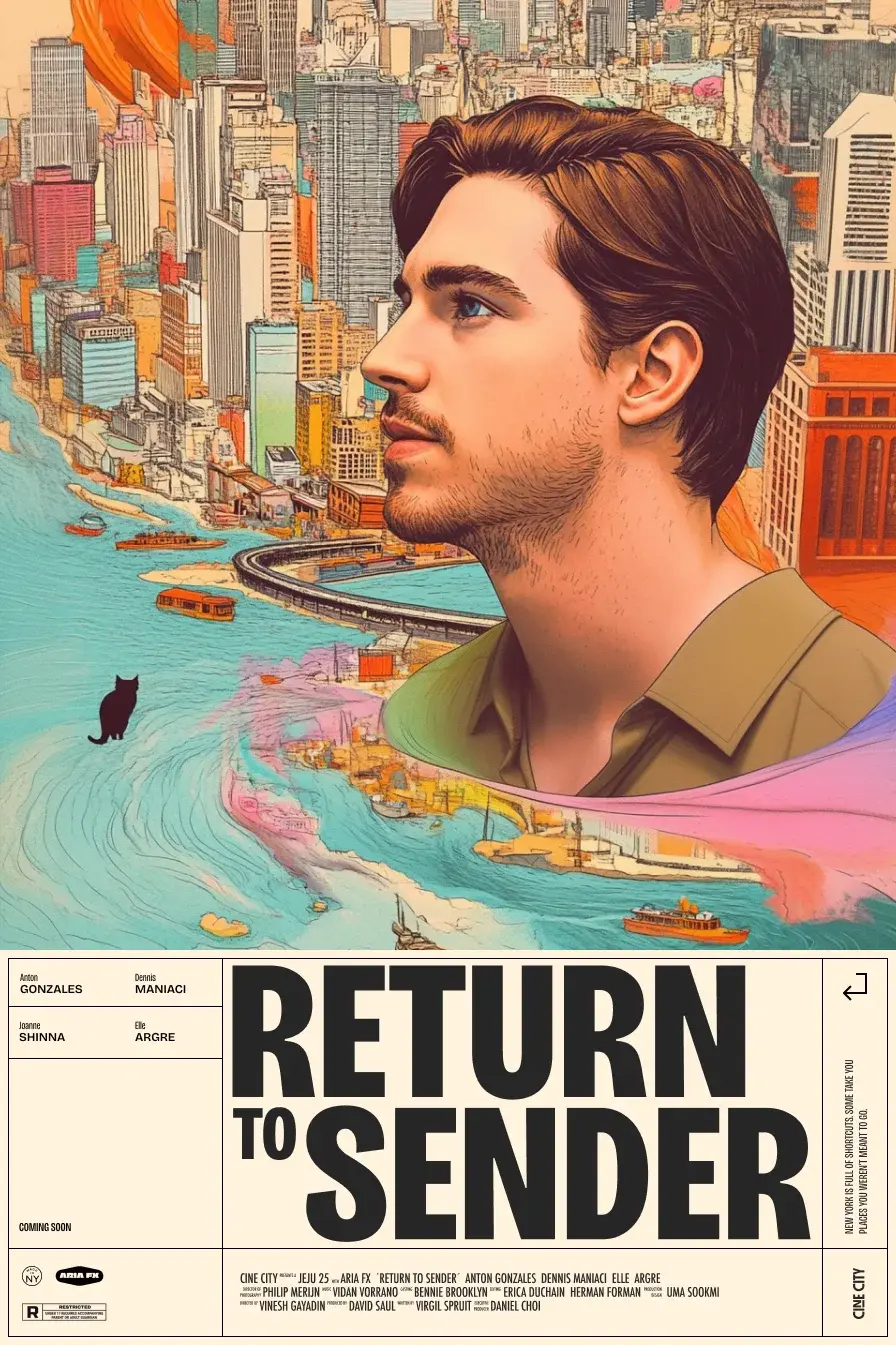
RETURN TO SENDER
2027
Highlighted film
A courier obsessed with speed takes a shortcut through an alley and emerges into a distorted New York City, similar to his own but eerily off. Landmarks shift, streets feel unfamiliar, and his long-dead brother is suddenly alive. His presence is merging both dimensions, restoring one while unraveling the other. Now, he must decide: return home and watch this city collapse or stay and let his own world decay.
Return to Sender is a film about movement, duality, and the unseen rhythms of New York. Shawn Ellis has spent his life navigating the city’s shortcuts, pushing for faster delivery times, but this time, his route has taken him somewhere he was never meant to be. The more he tries to understand the world he’s entered, the more the boundaries between them blur; one city improves as the other deteriorates. His final delivery may be the hardest one yet: choosing which version of reality he is willing to sacrifice.
Shawn, unknowingly caught in an alternate version of the city, delivers a package to someone strangely familiar.

It takes a moment, but Shawn recognizes him: Julian, his brother, dead for fifteen years.

multi-Dimensional city: A Place That’s Always Two Things at Once


A rundown and a new store front.
Two cities colliding.
Shawn and intersecting dimensions.
Washington Square Park Arch.
In Return to Sender, New York exists in two opposing states with one being thriving, sleek, and optimized, the other crumbling, dim, and fading. Shawn isn’t moving between them; he’s trapped in the alternate version, racing against time to find his way back. But as one city improves, the other deteriorates. The longer he stays, the more his real world slips away.
Multi-dimensional city
The Faster New York Moves, The Further It Splits

The city rewriting itself in real time.
New York has always been a city of contrasts, but by the late 2020s, these divides have reached new extremes. Tech-driven real estate and AI-led redevelopment have reshaped entire neighborhoods, pushing communities to the margins. This isn’t just about wealth, it’s about who gets to exist in the city at all. As mom-and-pop businesses and affordable housing vanish, a data-driven metropolis emerges, built for optimization, not for people. The film’s central conflict reflects this accelerated transformation.
50+
Over 50 high-rise residential towers were built citywide between 2025 and 2030.
18%
Yet vacancy rates in luxury units remained high, with nearly 18% sitting empty as they were used primarily as investment properties rather than homes.
Multi-dimensional city
Cinematography That Blurs NYC'S DIMENSIONS
Visually, Return to Sender amplifies these contrasts, creating a striking juxtaposition between the two New Yorks. The film employs shifting perspectives and subtle visual distortions to reflect the merging realities, creating a disorienting sense of transition as Shawn moves through environments that are never entirely stable.

Sleek, glass-covered skyscrapers glow against the neon haze, while just a few streets away, flickering bulbs and worn-out facades hint at a city fraying at the edges. As Shawn stays longer in this fractured version of NYC, he sees the shifts happen in real time. Neighborhoods slowly rebuilding while others rot, new towers appearing as old streets collapse. His journey isn’t just about escape, it’s about witnessing a city choosing which version of itself will survive.


Shawn watches as multiple versions of New York merge, forming a city that exists in overlapping realities.
Dreamlike, contrasting elements in New York City.

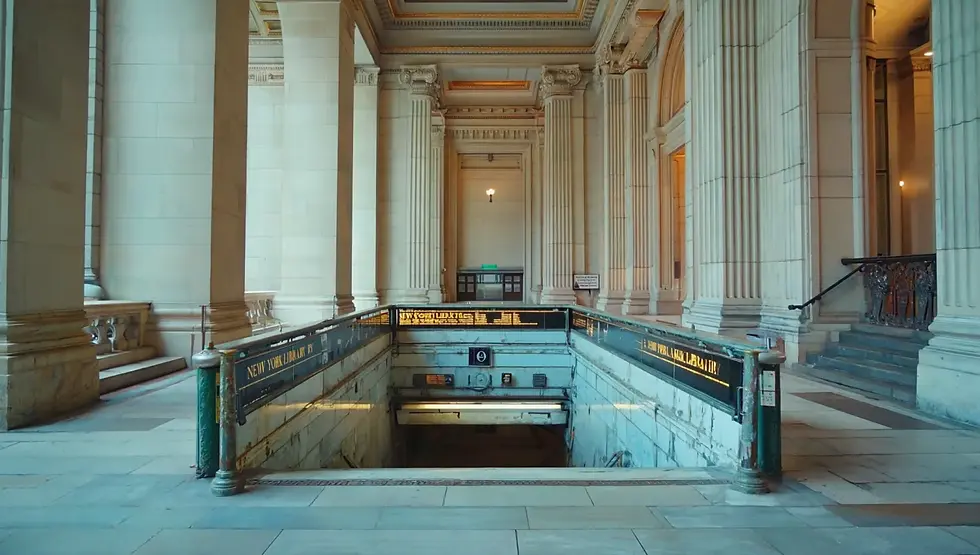
A rundown subway entrance inside of the New York Public Library.
No One Notices, But a Cat Is Always There

Shawn isn’t alone in his journey through a split New York. Cats (sometimes scrappy and starving, other times sleek and well-fed) cross his path, slipping between both realities without effort. They never interact with him directly, never demand attention, yet their presence linger like a quiet thread through his journey. More than just an animal, they are a living imprint of the city, reflecting what thrives, what struggles, and what fades away.
"This made me wonder how many versions of the city we’ve already lost."
Youtube comment: @futurevinesh
Maybe the city was always like this. Maybe Shawn just never noticed.

New York has always been built on extremes, wealth and struggle, movement and stagnation, past and future colliding in the same streets. But some contrasts aren’t meant to exist side by side. He thought he could move between them. He didn’t realize one would have to disappear.
Sunset Park
Brooklyn neighborhood where Shawn drops off a package addressed to his brother.
Cortlandt Alley
Location where Shawn steps through the portal leading to alternate New York City.
View LLM-amplified research
The blueprint for these future projections.
This film is inspired by real-world projections based on current trends, research, and policy developments. All numbers and scenarios are grounded in existing data and expert analysis on New York’s gig economy, urban growth, infrastructure plans, and socio-economic conditions.
Data highlights
Gig Economy and Delivery Workers
Supplying for New York's increasing 'on-demand' services
-
By 2025, approximately 190,000 gig workers in New York State operate through online platforms, representing over 20% of workers in low-paid industries.
-
New York City residents place over 100 million food delivery orders annually via app-based platforms.
-
In 2025, the global gig economy is valued at $455 billion, with an annual growth rate of 17.4%.
New Skyscrapers
Recent developments reshaping NYC’s skyline.
-
As of March 2024, New York City had 317 completed skyscrapers over 492 feet tall, the highest number in the Western Hemisphere.
-
A $1 billion residential project in Gowanus, Brooklyn, will feature a 27-story, 1,000-unit rental tower with 25% designated as affordable housing and a 30,000-square-foot public park—reflecting growing investment in historically slower-developing areas.
-
The 38-story office building at 5 Times Square is being converted into 1,250 residential apartments, 25% of which will be affordable housing—highlighting a broader shifts between commercial and residential real estate use.
Infrastructure Plans
Major initiatives shaping NYC’s future infrastructure.
-
The “City of Yes” initiative includes a $5 billion funding commitment to build 80,000 housing units and expand infrastructure, such as roads and sewage systems.
-
The Port Authority Bus Terminal in Midtown Manhattan is undergoing a $10 billion renovation to modernize the facility and increase bus capacity, aiming to improve flow in and out of the city.
-
The Interborough Express (IBX), a proposed 14-mile light rail line connecting Brooklyn and Queens, is projected to serve over 250,000 daily riders, with 30% from low-income households, reducing greenhouse gas emissions by 29.28 metric tons daily.
Multiple Cities in One
Economic disparities and urban layering in NYC.
-
The Trump administration’s budget for 2026 includes a $33 billion reduction in Department of Housing and Urban Development (HUD) funding ($26.7 billion impacting public housing), slashing New York City’s public housing funding by up to 45%.
-
In 2024, the top 3% of NYC wage earners saw a 9% increase in real wages, while low- and middle-wage workers experienced slower growth, exacerbating income inequality.
-
The bottom 40% of New Yorkers receive only 8% of the city’s aggregate income, whereas the top 20% receive nearly 58%, highlighting significant income disparity
-
Women in NYC earn $0.835 for every dollar earned by men; addressing this gap could reduce overall income inequality by 85%.
-
White New Yorkers are twice as likely as Latinx New Yorkers and 1.5 times as likely as Black New Yorkers to possess sufficient assets to mitigate financial hardship.
New York's Persistent Elements (elements that are 'always there')
Enduring features of NYC that remain constant amid change.
-
The persistent scaffolding - Known colloquially as “sidewalk sheds,” scaffolding structures are a ubiquitous part of the city’s streetscape. Despite efforts to reduce their number, they remain a constant feature, symbolizing the city’s perpetual state of construction and renewal.
-
Cortlandt Alley - a narrow passageway in Lower Manhattan, has been a popular filming location for decades, often representing the quintessential New York City alley in movies and television shows. Its gritty aesthetic continues to capture the city’s cinematic allure.
-
The fire Escapes - The intricate iron fire escapes adorning many older buildings are more than functional structures; they are iconic elements of the city’s architectural identity. Often used as impromptu gardens or gathering spots, they reflect the adaptability and spirit of New Yorkers
-
Return To Sender



With a fiscal crisis around the corner, high unemployment and wealthy people escaping the city, there was a breakdown of social order in NYC
1970 – 1980
A WAVE OF ANARCHY
With a fiscal crisis around the corner, high unemployment and wealthy people escaping the city, there was a breakdown of social order in NYC
1980 – 1990
NEW BEGINNINGS
With a fiscal crisis around the corner, high unemployment and wealthy people escaping the city, there was a breakdown of social order in NYC
1990 – 2000
CULTURAL RENAISSANCE
With a fiscal crisis around the corner, high unemployment and wealthy people escaping the city, there was a breakdown of social order in NYC
2000 – 2009
CHALLENGE AND TRANSFORMATION
With a fiscal crisis around the corner, high unemployment and wealthy people escaping the city, there was a breakdown of social order in NYC
2010 – 2019
A GROWING CITY
2025 – 2030
FUTURE YEARS
The filmic future of NYC, envisioned through Gen-AI -amplified research, exploring projected trends and the city’s evolution for the years to come