

CHANGING THE CITY FROM GRIT TO GLAMOUR
With declining crime rates and a steady economic growth in the 90s, the city went through a dynamic decade of big scale transformation that finally shifted its decades long notorious reputation into that of a “global city”. New York City finally became the world leader in economy, culture, and technology. But achieving that status didn't come easy.
Wall Street, Manhattan
Street in the city's financial district that has become symbol for the US economy in film and other media.
Upper West Side
Considered 'Uptown' for New Yorkers (along with Midtown and Upper East Side); a Manhattan area that has benefited the most from the economic growth.
Cover photo: Léon: The Professional (1994)
As the list of thorough law enforcement went on, it required an immense increase of police force. For this reason, upon taking office, Mayor David Dinkins began a rushed hiring spree. Nearly 8,000 officers joined the NYPD within two years.
While these measures contributed to a significant reduction in crime and an overall sense of improved safety, they also sparked debates about civil liberties and the potential for over-policing in some communities.
A 10 year old accidentally ends up alone in New York in Home Alone 2: Lost in New York (1992).

Patrick Swayze on the 42nd Street station in Ghost (1990)

The remaining issues in the way of being considered a “global city” were those which the city categorized under quality of life issues. To solve that, the city adopted a zero-tolerance approach, influenced by the Broken Windows Theory, which aims to deter major crimes by addressing minor offenses. A special “quality of life” task force was created to enforce laws related to smaller issues such as noise and sanitation, issues which were previously handled with a much lower priority. Efforts on graffiti control, a long standing battle for the city, were increased too. This included stricter penalties for graffiti artists, property owners and more removal of graffiti from public spaces.


A source for film inspiration
NYC FILMS AND DISNEY-FICATION
Strict policing and targeted neighborhood investment led to Disneyfication; transforming parts of the city into family-friendly areas for entertainment. But this change brought shifts in social dynamics and culture, resulting in conflicts. In response, some filmmakers needed to adapt their storytelling to the new commercialized image of New York, while indie filmmakers continued representing the city's diverse reality.
One of the examples of Disneyfication during this decade is Times Square (Midtown, Manhattan), which transformed into a glamorous entertainment area filled with neon signs, theaters and themed restaurants. It became the symbol of a bustling New York in mainstream films such as Home Alone 2 (1992), and Die Hard With A Vengeance (1995).
Other examples (mainly in Manhattan) were Union Square, Bryant Park and 42nd Street. While Disneyfication made these places feel significantly more safe, it often altered the character of existing communities and cultures.

Times Square, Manhattan in 1998.

A HIGH DEMAND FOR THE FRESH VOICES OF INDIE FILMS
Luckily not all voices in film were by the privileged as indie filmmaking surged in the 90s. Cameras became more affordable and the city had a growing number of accessible post-production facilities. As for talent, the city was home to many artists, actors, writers and musicians who were eager to collaborate on passion projects.
This enabled indie filmmakers to explore more unique and authentic stories without studio constrains. The fresh perspectives in these films strongly resonated with audiences which led to a high demand for indie films by viewers and distributors.
The Sundance Film Festival played a pivotal role as it helped filmmakers to recognition and distribution deals. This golden era of indie film culture brought Darren Androfsky’s debut film Pi (1998), Spike Lee’s Crooklyn (1994), Jim Jarmusch’s Night On Earth (1991) and many more.
SoHo, Manhattan
Neighborhood south from the "expensive" uptown area which was known for fostering fashion designers, visual artists and trendy stores.
East Village, Manhattan
South from uptown area. Known for its art galleries and music scene.
1990 – 1999
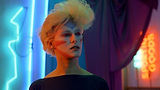
80's hits


90's hits


1970 – 1980
"The key, I think, to Jim, is that he went gray when he was 15... As a result, he always felt like an immigrant in the teenage world. He's been an immigrant—a benign, fascinated foreigner—ever since. And all his films are about that."
Tom Waits, musician, actor and friend.


04
4 Decades of making feature length indie films.
$7M
The average budget of a Jarmusch film (ranging between $2-12 milion)
Despite plenty of opportunities to work with Hollywood studios, Jim Jarmusch has persistently been a champion of indie cinema. Since his first film (Permanent Vacation, 1980), Jarmusch has made an indelible mark on the world of indie cinema. Jarmusch has collaborated with artists including Bill Murray, Tilda Swinton, Giancario Esposito, Adam Driver and Iggy Pop to make unconventional films which made him a key figure in New York’s underground film movement.

1980
Permanent Vacation
Jim Jarmusch's debut feature film explores the life of a young man wandering through New York City, reflecting the disaffected youth of the era.
Battery Park, Manhattan
1984
Stranger Than Paradise
This indie, minimalist, deadpan film by Jim Jarmusch follows the story of two friends and an immigrant relative as they navigate life in New York City.

1991
Night on Earth
An anthology of 5 different cab drivers in 5 cities around the world and their remarkable fares on the same eventful night (partially set in New York).
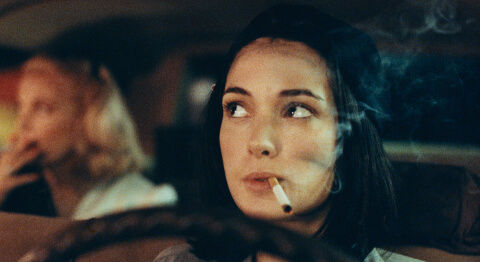
2005
Broken Flowers
Don Johnston receives an anonymous letter from a former lover informing him that he has a son who may be looking for him.

Jarmusch initially made New York his permanent resident to study film at NYU (Tisch School of the Arts). While living in East Village (which was a hub for artists at the time), Jarmusch became a key artist of New York’s “No Wave” film movement in the early 80s. An avant-garde movement challenged the conventional (I talk more about that in the creative boom during 1980-1989).
Jim Jarmusch’s influence on the city is deeply intertwined with his style of filmmaking. In his films he has captured the essence of the city in a way that few others have. While Hollywood focused on a fast-paced, bustling image of the city, Jarmusch’s films often reflect the slower, more contemplative pace of life in NYC through quirky characters.
Additionally, Jarmusch is known to balance different forms of arts, including literature, music and art. As a musician he has collaborated and composed some of his film’s soundtrack. For instance, Neil Young provided the score for Dead Man (1995) and his own band (Sqürl) has contributed to several of his films including Only Lovers Left Alive (2013). Jarmusch has also released a few studio albums on the side.
With the body of work over the years, Jarmusch's impact on indie films can simply not be overstated. His determination to bring small, more intimate, authentic stories on a limited budget encouraged countless aspiring filmmakers to create their own films in the city's competitive industry.
Films by Jim Jarmusch primarily set in New York
1980
Permanent Vacation
Jim Jarmusch's debut feature film explores the life of a young man wandering through New York City, reflecting the disaffected youth of the era.
1984
Stranger Than Paradise
This indie, minimalist, deadpan film by Jim Jarmusch follows the story of two friends and an immigrant relative as they navigate life in New York City.
1991
Night on Earth
An anthology of 5 different cab drivers in 5 cities around the world and their remarkable fares on the same eventful night (partially set in New York).
2005
Broken Flowers
Don Johnston receives an anonymous letter from a former lover informing him that he has a son who may be looking for him.
JIM JARMUSCH,
THE SILVER HAIRED, OUTSIDER INDIE FILM HERO
1990 – 1999


1994
Highlighted film
LÉON
While the film was shot both in New York City and Paris, director Besson has mentioned that Léon is first and foremost a New York movie. “When it comes to Léon I feel comfortable in New York because for me, in New York you can be invisible. You can see someone lying on the street and no one will stop.” said Besson.
The film explores a complex and unique relationship between a professional hitman, Léon (Jean Reno) and a young Mathilda (Natalie Portman), who escaped her troubled family in search for better luck in the metropolis. With the then current state of New York City, which balanced urban beauty with harsh realities, the city offered the perfect conditions to support this type of complex narrative.
With this, Besson tells a distinctive story about both isolation and an unlikely connection amidst urban chaos. Its original style that blends gritty realism and emotional depth made such an impact on filmmakers and audiences that it gathered a cult following over the years that contributed to its ongoing popularity.
Mathilda (Natalie Portman) learning from Léon.

Jean Reno plays Léon: a lone hitman in New York.

A STORY OF CONTRAST, MUCH LIKE THE CITY ITSELF
Luc Besson uses a number of contrasting elements in the film's story line that creates its unique tone. Starting with the dynamics between Léon and Mathilda. Léon is a hitman trying to live a lonely and secluded life in his small apartment. With its vastness and anonymity, the city helps with this feeling.
Mathilda sees the cities to help her with the opposite; she seeks for safety and company and finds that with Léon.
Besson also makes use of contrasting scenes of action and introspection and uses diverse neighborhoods, including the Upper-West, Lower East and Harlem, to create a juxtaposition of environments, all within the very same city.

Léon's (Jean Reno) stylish character blends into the streets of the city.
LÉON'S RESULT CAME DOWN TO A SERIES OF UNLIKELY PROBABILITIES
The final result of the film Léon came down exact timings of events. Some were in control but other's were left to sheer luck. Below a couple of "if' examples that could have turned out entirely different.
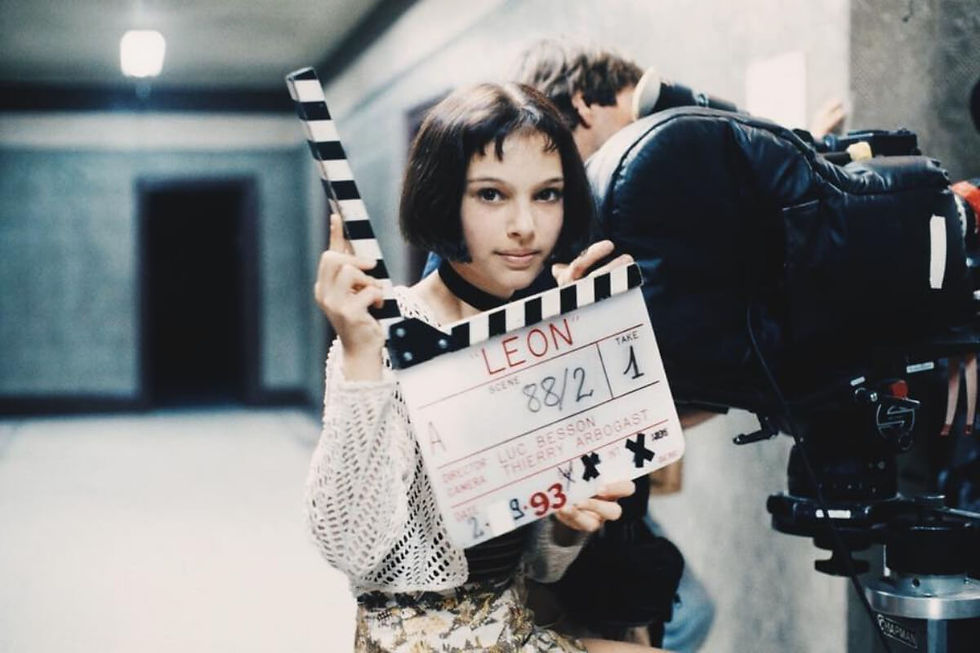
If Bruce Willis wasn't so busy, the film may have not happened
Director Luc Besson and his production team were set to shoot The Fifth Element in 1994. But the film was delayed because Bruce Willis had a busy schedule, making him unavailable to shoot at that time. Instead of dismissing the team, Besson wrote Léon within 1 month and took 3 months with the team to create it.
If the team didn't study the traffic light patterns, the intro shot would not be possible since it was shot without closing off streets.

If the cops on set didn't look so real, a nearby robbery have succeeded as a robber surrendered himself to the police actors.

If Natalie Portman didn't do her audition last minute, she probably would not have been casted
Natalie Portman (who plays Mathilda) did a last minute audition for the film. She audition just a few days before her 12th birthday for the role. This was critical since this was the minimum age required to play this role. She auditioned and stood out against 2,000 other participants.
MATHILDA'S PLANT IN A CITY OF GRIT

Throughout the film, we see the iconic potted plant that serves as a visual representation of the transformative journey of the characters. It conveys the innocence of Mathilda, growth and the need for a sense of a normal stable environment in a city filled with violence and chaos.

Léon on top of a building close at the south-west corner of Central Park (near Columbus Circle).
Small initial success, big long term influence
Léon had a modest success within the US upon its initial release. However, the unique storytelling, complex characters, stylish action sequences and urban realism has a strong influence on films and filmmakers in New York and beyond. Themes that were initial explored in Léon: The Professional, can be found back in films like The Brave One (2007) and John Wick (2014).
Apartment of Léon
The Upper-West apartment where Léon lives in solidarity.
Central Park rooftop
Filming location of the sniper scene with Léon and Mathilda facing Central Park.
Léon

1995
Highlighted film
KIDS

LÉON
1994
Highlighted film
Watch
IMDb
Spotify

MEN IN BLACK
1997
Highlighted film
Watch
IMDb
Spotify

KIDS
1995
Highlighted film
Watch
IMDb
Spotify
A bleak, raw and unfiltered early nineties snapshot that shows drugs and sexual behavior issues within the youth culture of NYC. “I think if it had been later, I don’t think it would have been made – in terms of what the movie is and the city was”, says director Larry Clark.
In documentary style, Clark’s camera lens observes a group of teens through one day and night in which they travel Manhattan on skateboards and subway trains, have sex, drink, use drugs, talk, party, and crash, before starting all over again the next day. Early on in this film, we see one of the main characters (Telly) talking to his friend about “de-virginizing” as many young girls as he possibly can.
What Telly doesn’t tell those girls, is that he is HIV positive. As he goes through his day on the hunt for his conquest, he uses drugs and steals from shops around the city. Meanwhile, Jennie (one of Telly’s early victims) tries to stop him and confront him.
With this intense plot Clark shows us teenagers in 90s New York City which he initially captured on photos before working on Kids. “As I look back on everything, I’m showing a small group of people that you wouldn’t know about otherwise. Every film, every bit of work, you would not know about these people if I didn’t make the film”.


Kids was created by street photographer Larry Clark.
STARRING REAL TEENAGERS FROM THE STREETS OF NYC

Chloë Sevigny as Jennie

Justin Pierce as Casper

Rosario Dawson as Ruby

Harold Hunter as Harold

Leo Fitzpatrick as Telly

Jeff Pang as Jeff
One of the elements that greatly added to the film's authenticity was Clarke's direction in casting. He didn't want to use twenty-somethings pretending to be teenagers, or use movie kids who had been directed their whole life.
So instead, the writer of the film (Harmony Korine) suggested casting a few people he knew from the skateboarding community. "Nobody had acted before. They were all in Washington Square, they were skateboarding kids" Clarke said.


Open call for casting and casting sheets for Kids.
With an unexperienced cast remaining weeks for production, crew members called told Clarke he didn't know what he was doing."But I knew exactly what I was doing. Because I knew what I wanted the film to look like", said Clarke."I wanted it to look like you were eavesdropping on this world and you wouldn't have a chance to know about it otherwise. And I wanted it shot like that. So it's in kind of a documentary style: We just put them out there and shot 'em, with a long lens and followed them. We just shot on the street."
With real substance use on the set, former cast members have criticized Clarke for exposing them in their lowest state to entire world. For some of these "kids" it started a highly successful acting career (Chloë Sevigny, Rosario Dawson), while others met a more unfortunate future after the film (Justin Pierce, Harold Hunter).
06
Six weeks of shooting with an unexperienced cast
$1.5M
Total funding for the film.
$7.4M
Box office, due to limited screening under its NC-17 rating
THE SKATEBOARDING CULTURE OF THE EARLY NINETIES
Rosario Dawson as Ruby
Harold Hunter as Harold

Chloë Sevigny as Jennie
Justin Pierce as Casper
Jeff Pang as Jeff
Leo Fitzpatrick as Telly
The film prominently features skateboarding, which was a significant subculture among New York City's youth during the early '90s. Skateboarding was a form of rebellion and self-expression for many young people. Particularly, the New York skate scene was known for its inclusivity, being together people from various different backgrounds. People in the subculture expressed themselves with their boards and their fashion style, which often included baggy jeans, and oversized shirts.

Sean Sheffey skateboarding in Manhattan.
Graffiti, punk and hip hop were closely associated with skateboarding and there was a natural cross-pollination of these subcultures. During this time the use of marijuana and alcohol were frequently used substances amongst teenagers. Altogether, the skateboarding culture offered an escape for young people in the urban chaos of 90s New York.
"This movie gave me a creepy feeling. It made me not want to ever visit NYC again."
@dsasddsadaasdasd6461 (Youtube comment, 7 years ago)
A WAKE UP CALL TO THE MODERN WORLD
The film was so shocking, that mother company Disney refused to release the NC-17 rated film under Miramax. So instead, Miramax started a one-off company (called Shining Excalibur) and bought the distribution rights from Disney for $3.5M, which was more than double of the film's production budget. Due to its NC-17 rating, the film was only available at 184 screens, limiting its financial success.


Real polaroids of the same people that appeared in Kids, taken by Larry Clark.
Kids, released in the summer of 1995, sent shockwaves through audiences world wide with its explicit topics and caused debates about its artistic value. At the time of its release, conversations around around HIV/AIDS and drugs use amongst teenagers were a taboo. In this context, The New York Times called kids "A wake up call to the modern world", referring the needs for awareness and conversations around the themes that the film has exposed to the larger audiences.
Washington Square Park
Scene where the group of skateboarders hang out
515 East 84th Street
The opening scene where Casper meets Telly
Kids

1997
Highlighted film
MEN IN BLACK
With NYC as the setting, director Sonnenfeld leveraged the city's reputation as a diverse melting pot of immigrants. The film's premise, centered on the Men in Black keeping an eye on aliens blending in with humans, found an ideal backdrop in a place where people often go about their business without much notice, even when seeing strange behavior.
WHERE THEY LAND, RUN HIDE AND PROTECT IN THE CITY
Unisphere, Flushing Meadows Corona Park, Queens
The Unisphere serves as a fictional landing mark for aliens visiting Earth. The film suggest that the structure is a recognizable point for extraterrestrial visitors, due to its enormous scale and central location in Queens. The concept humorously fits into the film's theme of aliens living secretly among humans

Agent K (Tommy Lee Jones) in conversation with Mikey the alien.
Agent K (Will Smith) at the MIB headquarters.

Unisphere
Large globe, build for the 1964 New York World Fair, located in Corona Park, Queens.
The Guggenheim Museum, Manhattan
Early in the film, Will Smith's character as NYPD officer Edwards is chasing a normal looking felon along the raised section of Park Avenue crossing. The person he is trying to catch runs oddly fast and forces officer Edwards to run after him through the Guggenheim Museum.
Solomon R. Guggenheim Museum
Museum for the modern arts with distinctive, spiral shaped architecture.
Gansevoort St., Chelsea, Manhattan
Edgar, the film's primary alien antagonist (disguised as a human), conceals his true identity for most of the movie. In a restaurant on the vibrant Gansevoort Street, he takes his deception a step further by posing as a waiter to go after one of his intended victims.
Vibrant street in the neighborhood of Chelsea (Manhattan) filled with restaurants and boutique stores.
SECRETS OF THE MEN IN BLACK: FROM PAGES TO SCREENS
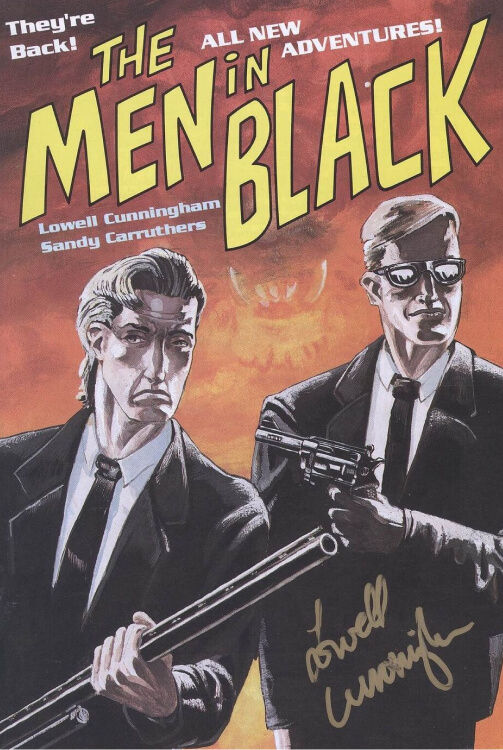
The original stories of the Men in Black date back 7 years prior to the film release. Writer Lowell Cunningham and artist Sandy Carruthers created the comic The Men In Black. The comic blended fiction, conspiracies and humor in its tone which brought the inspiration for the film. After the successful release of the film, Marvel bought the rights of the comic, which also meant ownership of any and all publications that would follow, including more films and spin-offs.
THE HIGHEST GROSSING ACTION BUDDY COMEDY OF ALL TIME
Men in Black made history as the highest-grossing action buddy comedy film of all time. Building on the iconic concepts and landmarks of New York City, the film captivated audiences with its blend of science fiction and humor. It retained its record even as Rush Hour 2 came close in 2001. The success of the original film paved the way for a series of equally successful sequels, including Men in Black II (2002) and Men in Black III (2012). The entire franchise accumulated estimated profits exceeding $1 billion.
The Men In Black Headquarters
Located at the Holland Tunnel ventilator, near The Battery Park
Meadow Flushing Corona Park
Filming locations (Unisphere and NY State Pavilion towers)
$589M
Global box office Men in Black.
$445M
Global box office Men in Black II.
$654M
Global box office Men in Black III.
By using a detective strategy of walking past storefronts in downtown Manhattan followed by a drive to Queens to face a giant bug in Flushing Meadows Corona Park, Men In Black takes us thoroughly through the New York streets with its bustling nineties culture.
Agent J, a quick-witted and street-smart NYPD officer, gets recruited by a secret organization known as the Men in Black (MIB) after witnessing an alien encounter. MIB, led by the no-nonsense Agent K (Tommy Lee Jones), is responsible for keeping extraterrestrial beings hidden from the public eye and maintaining peace on Earth.
With humor, wit, and the use of high-tech gadgets, Agent K and J work to save the world from an intergalactic threat while ensuring that New Yorkers remain unaware of the aliens in their midst.


Battery Place, The Battery, Manhattan
The HQ in from which the Men in Black and its team operate to protect New Yorkers from extraterrestrial threats. Like many cases in the film, hidden in plain sight beneath the Holland Tunnel Ventilator Shaft near The Battery Park, in the southern tip of Manhattan.


Battery Park
Park near New York's finical district with ferry access to Staten Island and Ellis Island.
The original Men In Black stories by writer Lowell Cunningham and artist Sandy Carruthers.

3.5K
Number of unique aliens featured in the film, each with its own unique design.
03
3 Academy Awards, including Best Make up and Best Art Direction.




Tommy Lee Jones and Will Smith wearing the Ray-Ban Predator, which gained a huge increase in sales after the film release.

Men In Black
Other notable films 1990 – 1999
1990
Goodfellas
The story of Henry Hill and his life in the mafia, covering his relationship with his wife and mob partners.
IMDb
1990
Ghost
After a young man is murdered, his spirit stays behind to warn his lover of danger, with the help of a psychic.
IMDb
1992
Scent of a Woman
A prep school student needing money agrees to "babysit" a blind man, but the job is not at all what he anticipated.
IMDb
1992
Home Alone 2: Lost in New York
Kevin McCallister accidentally finds himself stranded in New York City - and last year's criminals are not far behind.
IMDb
1993
Six Degrees of Separation
An affluent NYC couple finds their lives touched by a mysterious young black man who is never quite who he says he is.
IMDb
1993
A Bronx Tale
Intense drama about a boy torn between his tough, hard-working father and a violent yet charismatic crime boss.
1994
Crooklyn
Spike Lee's semi-autobiographical portrait of a school teacher, her stubborn musician husband and their kids living in Brooklyn in 1973.
1995
Rumble In The Bronx
A young man visiting and helping his uncle in New York City finds himself forced to fight a street gang and the mob with his martial art skills.
1997
The Devil's Advocate
An exceptionally-adept lawyer is offered a job at a high-end NYC law firm with a high-end boss--the biggest opportunity of his career to date.
1997
Donnie Brasco
An FBI undercover agent infiltrates the mob and finds himself identifying more with the Mafia life--at the expense of his regular one.
1997
As Good as It Gets
A single mother and waitress, an author, and an artist form an unlikely friendship after the artist is assaulted in a robbery.
1988
You've Got Mail
Businessman Joe Fox, and Kathleen Kelly, an independent bookstore owner, fall in love online while he unknowingly aims to put her shop out of business.
1989
Being John Malkovich
A puppeteer discovers a portal that leads literally into the head of movie star John Malkovich.
1990
Goodfellas
The story of Henry Hill and his life in the mafia, covering his relationship with his wife and mob partners.
1981
Escape from New York
In 1997, when the U.S. president crashes into Manhattan, now a giant maximum security prison, a convicted bank robber is sent in to rescue him.
1990
Ghost
After a young man is murdered, his spirit stays behind to warn his lover of danger, with the help of a psychic
1992
Scent of a Woman
A prep school student needing money agrees to "babysit" a blind man, but the job is not at all what he anticipated.
1992
Home Alone 2: Lost in New York
Kevin McCallister accidentally finds himself stranded in New York City - and last year's criminals are not far behind.
IMDb
1993
Six Degrees of Separation
An affluent NYC couple finds their lives touched by a mysterious young black man who is never quite who he says he is.
1993
A Bronx Tale
Intense drama about a boy torn between his tough, hard-working father and a violent yet charismatic crime boss.
1994
Crooklyn
Spike Lee's semi-autobiographical portrait of a school teacher, her stubborn musician husband and their kids living in Brooklyn in 1973.
1995
Rumble In The Bronx
A young man visiting and helping his uncle in New York City finds himself forced to fight a street gang and the mob with his martial art skills.
1997
The Devil's Advocate
An exceptionally-adept lawyer is offered a job at a high-end NYC law firm with a high-end boss--the biggest opportunity of his career to date.
1997
Donnie Brasco
An FBI undercover agent infiltrates the mob and finds himself identifying more with the Mafia life--at the expense of his regular one.
1997
As Good as It Gets
A single mother and waitress, an author, and an artist form an unlikely friendship after the artist is assaulted in a robbery.
1988
You've Got Mail
Businessman Joe Fox, and Kathleen Kelly, an independent bookstore owner, fall in love online while he unknowingly aims to put her shop out of business.
1989
Being John Malkovich
A puppeteer discovers a portal that leads literally into the head of movie star John Malkovich.
With a fiscal crisis around the corner, high unemployment and wealthy people escaping the city, there was a breakdown of social order in NYC
1970 – 1980
A WAVE OF ANARCHY
With a fiscal crisis around the corner, high unemployment and wealthy people escaping the city, there was a breakdown of social order in NYC
1980 – 1990
NEW BEGINNINGS
With a fiscal crisis around the corner, high unemployment and wealthy people escaping the city, there was a breakdown of social order in NYC
1990 – 2000
CULTURAL RENAISSANCE
With a fiscal crisis around the corner, high unemployment and wealthy people escaping the city, there was a breakdown of social order in NYC
2000 – 2009
CHALLENGE AND TRANSFORMATION
With a fiscal crisis around the corner, high unemployment and wealthy people escaping the city, there was a breakdown of social order in NYC
2010 – 2019
A GROWING CITY
The filmic future of NYC, envisioned through Gen-AI -amplified research, exploring projected trends and the city’s evolution for the years to come