



New York has long been the backdrop that never sleeps in the films we grew up with. Cine City, an AI-amplified research project, tells the city’s cinematic evolution from the 1970s to a projected 2030, using the past to imagine what comes next.


A WAVE OF ANARCHY THAT MADE A GRITTY NEW YORK
With high unemployment and wealthy people escaping the city in the 70s, there was a breakdown of social order in NYC. Crime increased to an all-time high with violence, drugs and looting. This earned NYC the name “Fear City” and sparked international interest for flashy, gritty, sadistic entertainment, based on real life dramas.
New York Transit Museum
Formally Court St. Station (Soley used for film productions during the 70s)
New York Transit Museum
Formally Court St. Station (Soley used for film productions during the 70s)
Cover photo: Serpico (1973)
In addition to real life events that aided inspiration to this reputation worsening films, the city’s counsel aided filmmakers to produce their films on NYC streets by being royal with permits. Beyond the streets, full and exclusive access to public buildings and even subway stations were made available for shoots. As an example; the old subway station of Court St. in Brooklyn (now known as the Museum of Public Transportation), became fully capitalized on as a set for films during this period. These conditions all together, helped shaping some of the most iconic films. But why would a city that is struggling with its reputation support films that were significantly worsen its image?

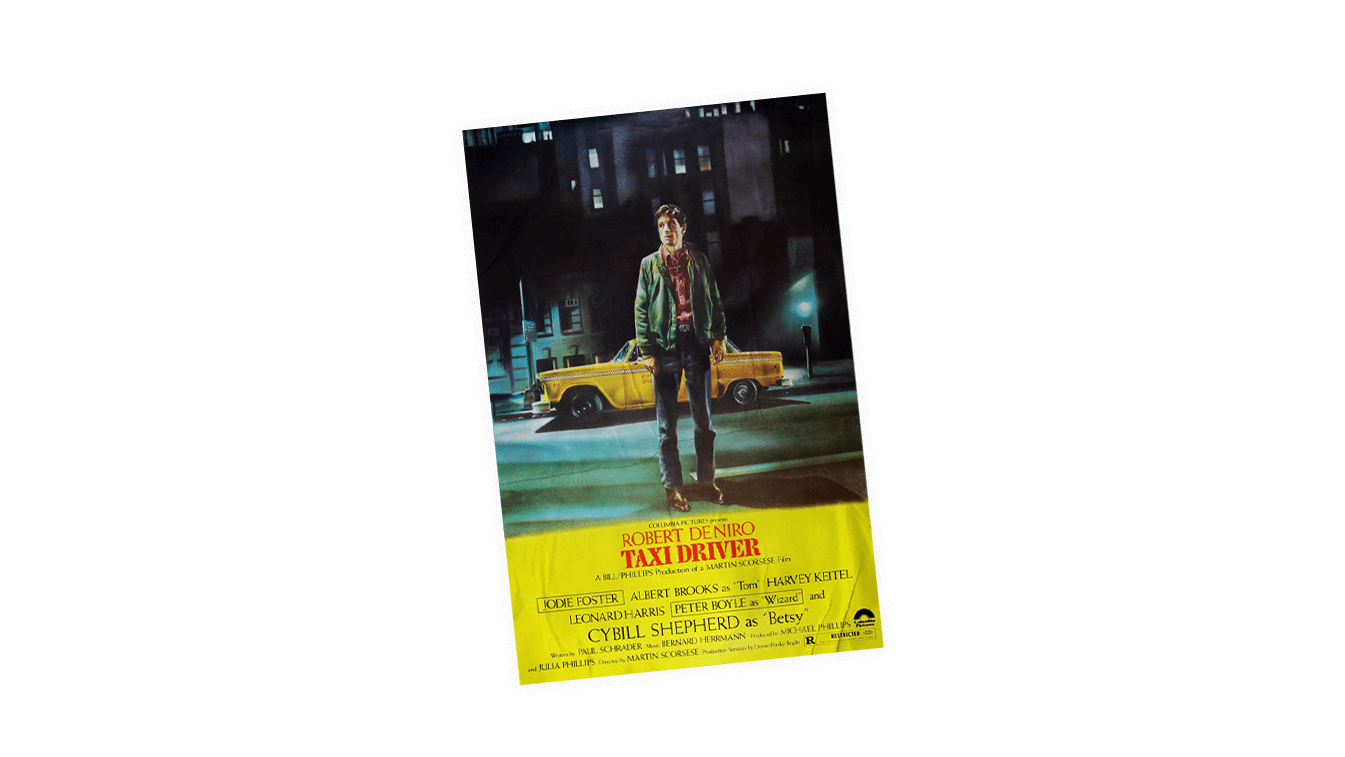
Martin Scorsese's Taxi Driver (1976).
The car chase scene in The French Connection (1971).

Hoe Avenue at 172nd Street, Bronx during the 70s.

The international interest in these type of stories weren’t limited to merely film. News channels, TV shows, books and magazines started to amplify stories from “Fear City” for it’s flashy value. The bloodier and more attention provoking, the better. With this ongoing, notorious image, filmmakers were given a vivid, realistic backdrop that required little to no special effects to work with. The anarchy that happened in the city, happened on the screen. Within this intersection of filmmaking and social issues, films were frequently created about desperate characters thriving around corrupt cops (Serpico (1973)), drugs, (The French Connection (1971)), call girls (Klute (1971)), mafia culture (The Godfather (1972)) and other violent or class based issues.
A source for film inspiration
CORRUPT COPS AND ONE TOO MANY GANGS
After many allegations of police corruption, Mayor Lindsey started a commission in 1970 to investigate. Two years later a report was finalized that found multiple instances of serious misconduct, including top officials covering up cases of extortion, bribery, drug trafficking and more. The top witness? NYPD detective Frank Serpico.
During this time, the absence of trust in the police incited people to protect their own communities. Paired with a poor social order, this lead to a record number of gangs being formed. So many, that its peak, south Bronx only (a neighborhood with the highest crime rates at the time) counted over 130 different gangs. With this increasing violence amongst the gangs throughout NYC, the city often became the stage of gang turf battles, as depicted in the 1973 film The Warriors. In this film, a gang is forced to face other gangs as they move from the Bronx to their home turf Coney Island.
Al Pacino plays Frank Serpico in Serpico (1973).

A shot from Shaft (1971), on West 41 Street, Manhattan.
Meanwhile, in The French Connection (1971) Racism, excessive brutality and disregard for human life are included in parts of the story since they were the everyday reality of New York. Other films reflected the same brutal honestly of cops at that time and place (Shaft (1971), Across 110th Street (1972)). This tense situation on both sides of society seemed hopeless, until detective Frank Serpico enforced true reformation that helped effect real change in law enforcement. Serpico (1973), follows Serpico (portrait by Al Pacino) as an NYPD detective and as the "lamplighter" behind the 1970s police corruption publications.
South Bronx
Neighborhood with highest crime rate during the 70s
Brooklyn
Popular filming locations during the 1970s (The Warriors, Serpico, The French Connection)
1970 – 1980

70's hits


1970 – 1980
Five of those are stories in New York City.
05
09
Nine films by Martin Scorsese were released between 1970 and 1979 alone.
After Scorsese was expelled from his studies to become a Catholic priest, he continued to approach issues around guilt, faith and redemption through film. The beginning of his film career started with attending the NYU's film school, where he later continued to teach while starting his films. His Italian-American background and the grittiness of 70s NYC strongly influenced Scorsese’s style.

1970
Street Scenes
In 1970 major protests against the war in Vietnam occurred in the Wall Street area of New York City and ultimately in a large anti-war demonstration in Washington, D.C.
Wall Street, Manhattan
1973
Mean Streets
A slice of street life in Little Italy among lower Mafiosos and criminals. A young criminal gets in over his head with a vicious loan shark. In an attempt to free himself from the dangers of his debt, he gets help from a friend who is also involved in criminal activities.
Little Italy, Manhattan
1974
Italianamerican
Scorsese interviews his parents in a short documentary filmed in the couple's Little Italy apartment. They discuss their origins in Italy, life after the war, their ancestors and extended family, their religious beliefs and immigration to the USA.
Little Italy, Manhattan
1976
Taxi Driver
Suffering from insomnia, disturbed loner Travis Bickle (Robert De Niro) takes a job as a New York City cabbie, haunting the streets nightly, growing increasingly detached from reality as he dreams of cleaning up the filthy city.
W 42nd Street, Manhattan

1977
New York, New York
An egotistical saxophonist and a young lounge singer meet on VJ Day and embark upon a strained and rocky romance, even as their careers begin a long, uphill climb.
Surprisingly, shot in L.A

It was not until 6 years after his first feature film that Scorsese career really kicked off with the release of the 1973 film Mean Streets. This film tells a story set entirely in Little Italy (Manhattan), from the perspective of Mafiosos and criminals of the time. This blueprint Scorsese film draws direct inspiration from the culture he knows from his youth, as Scorsese (born in Queens) grew up in Little Italy with his parents.
While growing up in Little Italy, Scorsese did not spent much time outside of his third floor apartment on 253 Elizabeth Street, as he was suffering health issues that included chronic asthma. "I couldn't run around, so I would see everything from an overhead shot", he explained. "From the third floor, looking down. In my movies some critics say 'Oh, he's always doing God's point of view.' No, actually, it's mine. It looks great from up there".
In addition to studying the characters through the window, Scorsese spent plenty of time watching movies on television which ran on repeat. Altogether, it would lead to inspiration for his own stories which he started to draw frame by frame like a storyboard.
The 70's continued to be exciting days for directors like Scorsese, as directors became the lead in film productions, rather than the studio. Films like the highly successful Taxi Driver (1976, which I'll cover later on this page), were part of this filmmaking movement, which we now call 'New Hollywood'.
In the decades after, Scorsese emerged as one of the most significant and influential filmmakers in American History. He has been crucial in the development of modern cinema as we know it today by introducing new methods of storytelling through bold, intense topics and characters, dynamic camera movements, fast-paced editing, and using pop music in his films. His successes not only resulted in having the most Oscar nominations of any living director, but also paved the way for young filmmakers to focus on sub-topics and the cultures of New York City.
Scorsese in and about New York during the 70s
1970
Street Scenes
In 1970 protests against the war in Vietnam in Wall Street area of New York City and in a large anti-war demonstration in Washington, D.C.
1973
Mean Streets
A slice of street life in Little Italy among Mafiosos. A young criminal gets in over his head with a loan. In an attempt to free himself from the dangers of his debt, he gets help from a friend who is also involved in criminal activities.

1974
Italianamerican
Scorsese interviews his parents in a short documentary filmed in their Little Italy apartment. They discuss their origins in Italy, life after the war, immigration to the USA and more.

1976
Taxi Driver
Suffering from insomnia, disturbed loner Travis Bickle takes a job as a New York City cabbie, growing increasingly detached from reality as he dreams of cleaning up the filthy city.

1977
New York, New York
An egotistical saxophonist and a young lounge singer embarks upon a strained and rocky romance, even as their careers begin a long, uphill climb.
Surprisingly, shot in L.A
MARTIN SCORSESE,
LITTLE ITALY'S SON BRINGS NEW YORK TO THE SCREENS
1970 – 1980


1979
Highlighted film
THE WARRIORS

1971
Highlighted film
THE FRENCH CONNECTION

1976
Highlighted film
TAXI DRIVER
While the state of New York City offered plenty social problem stories as it was, director Walter Hill deliberately avoided research while writing The Warriors. Hill saw the project as an opportunity to project his imagination of a dystopian near future with gangs in the city. "I just tried to catch the vibe of New York City and project a few years ahead", he said.

The gang uses the NYC subway, to move across town.
'The Boppers' one of the many fictional gangs in the film.

Arguably the most iconic beach side amusement park seen in a number of films, Coney Island has seen many transformations over the decades. Located in the south of Brooklyn and highly accessible with four subway lines, Coney Island has been a popular weekend escape for working class New Yorkers. They came for famous attractions like the 'Wonder Wheel' and the 'Cyclone' rollercoaster. Both of which appear in The Warriors.
The struggles of New York City in the 70s impacted Coney Island too as further financial funding was revoked. The area became a frequently meet up spot for gangs (as seen in The Warriors) which helped worsening its reputation over the years. Today, funding has partially returned and several communities have worked to preserve the iconic, now vintage, Coney Island amusement park.


The Warriors walk in Coney Island with the 'Cyclone' rollercoaster in the background.


THE TROUBLE IN MAKING A FILM IN SEVENTIES NYC ABOUT FICTIONAL GANGS? REAL GANGS
Navigating around the possible dangers of shooting such a film on the streets of NYC started with extensive meetings with the NYPD gang department to map out where the production team could and could not shoot. This lead to moving forward with real-life gangs involved in the production. For it’s most extensive and most memorable scene that opened the film, 1000 extras were used which included real-life gangs who turned up in their original costumes. In this scene we see a large scale meet up in the Bronx (which is actually filmed in Riverside Park. Manhattan) that includes all the "main gangs" of New York City.
Not all of the real-life gang members went home in their own clothes during the days of the shoot. Many extras wanted to keep the given costumes for their own use. Since this was costing the studio a lot of money, they offered a lottery ticket in return for their costumes at the end of the shoot in which one person would win a color TV. This worked out well initially, but backfired when the winner was mugged within view of the crew on location after attempting to take their TV home.
Starting with an iconic shot of the Wonder Wheel, one of the attractions on Coney Island, the film created many memorable city shots as a gang was forced to move across town. Because they are being wrongfully accused of a murder on a gang leader while being in the Bronx, The Warriors try to make it home to Coney Island by using the iconic New York subway. While passing the stops and neighborhoods, The Warriors face other gangs who are out on revenge.
In contradiction to the original 1956 novel The Warriors by Sol Yurick, the film does not hone into issues like sexuality, reputation or family. Much rather, the film cuts closer to an action packed, urban take on a Western. "When you look at the movie now, a kind of harsh realism is not the first thing that occurs to you about it. It looks very stylized" said Hill.


89
89 Fictional gangs in the stories of The Warriors.
100K
100K Real life active gang members in 1979.
5:1
A 5:1 ratio between the number of gang members and cops in 70s NYC.
ALL THE WAY BACK TO CONEY ISLAND

Coney Island, Brooklyn
The home turf of The Warriors
Riverside Park, Manhattan
'Bronx' shooting location for meet up of all the gangs
Alex Monzó
Creator of the gang's logo patches

The Warriors
The coffee shop
The coffee shop where Travis and Betsy met for their date (currently a Duane Reade pharmacy)
Show and Tell Theatre
Frequent stop for Travis (theatre currently demolished)


SCORCESE


AND


DE NIRO
Taxi Driver marks the second collaboration between the duo after director De Palma had introduced them. Scorsese and De Niro had previously worked together on the 1973 film Mean Streets which revolves around characters in Little Italy, Manhattan. A neighborhood in which both these men were raised.
Robert De Niro offers a high amount of intensity as an actor, which is highly suitable for Scorsese's intense, realistic, and often, violent film. The two reunite many times after this film, to make more genre defying films the decades to follow. Yet, many people still consider Taxi Driver as the most successful collaboration between the two.
As an example of working with a tiny budget, Scorsese and cinematographer Michael Chapman hid themselves on the cab's backseat floor to capture the atmospheric NYC lights during the night shoots. These simultaneous shoots of Travis driving and atmospheric b-role shots happened while the sound technicians were hidden in the trunk. With methods like these, Scorsese wanted immerse viewers into Travis's world and his late night drives. Later, Chapman would admit that he was heavily influenced by French New Wave filmmakers and used this inspiration as a solution for the lack of budget for "traditional things".
When Scorsese was handed the script for Taxi Driver, he was forced to make drastic compromises to meet the tiny budget. But one thing he would not compromise on was the location. "It has to be New York, because that's the center for cabs. And like I say, anyone who drives a cab for one night in New York is gonna turn out like Travis".
AND
SCORCESE
DE NIRO


AN INSOMNIAC TAXI DRIVER THROUGH NYC'S COLORS OF THE NIGHT


The film's main character, Travis Bickle (played by Robert De Niro), takes on a job as a night time cab driver who observes the New York streets as he aimlessly moves around. While failing to connect with the city and feeling more and more isolated, Travis grows an obsession for guns and dreams of "washing all the scum of the streets".
Both Scorsese and De Niro fully immersed themselves into the protagonist's disturbing mental's consciousness. As part of preparing for his role, De Niro even spent time driving through NYC in a cab himself, for 12 hour stretches at a time. Scorsese helped viewers to get immersed within Travis's world by applying distinct color grading that reflect the loneliness and mental sickness of Travis. He also applied camera techniques that were unconventional at the time, for instance using shaky hand held camera movement to give some scenes a documentary feeling and by applying the God's camera angle view.
Taxi Driver is a remarkable film to watch today, as it shows the gritty New York that we don't have anymore. Filled with dubious characters and crumbling streets that were overshadowed by crime. The depiction of crime and violence goes so far, that Scorsese had to desaturate colors in scenes that contain blood in order to avoid an X rating which could have diminished the film's enormous success.
Based on a script with personal experiences from its writer Paul Schrader, Taxi Driver keeps the focus on the lonely, psychopathic veteran from beginning to end. With New York City as the pressure cooker to an already damaged character, the events unfold from haunting to extreme violent. It contains a just 12 year old Jodie Foster who plays a prostitute, a gruesome shootout and our psychopathic anti-hero being portrait as a hero for being successful in "washing all the scum off the streets" with extreme violence.
While the film was received with praise and awarded with a Palm d'Or at the Cannes Film Festival in 1976, the film was simply too much to handle for many viewers at the time and will arguably still leave an impact on viewers today.
A controversial hit
NYC'S FILM POWER COUPLE FOR DECADES TO COME

Travis Bickle in his final stages of the film.
$1.3M
Total budget (which ran over to $1.9M).
$35K
Was the pay cut De Niro accepted, despite being offered $500K for other roles.
$21M
Earnings on the film by just the end of 1976.
ALL AN INSOMNIAC TAXI DRIVER THROUGH THE NYC'S COLORS OF THE NIGHT
Taxi Driver

TAXI DRIVER
1976
Highlighted film
Watch
IMDb
Spotify

THE FRENCH CONNECTION
1971
Highlighted film
Watch
IMDb
Spotify
Car chase route
The famous car chase below the Bensonhurts / Stillwell elevated railway in Brooklyn
Brooklyn Bridge
Shooting location of the traffic jam on the bridge. Shot without city permits
Eric White
Creator of the stunning car chase painting
Besides the real car chase and 86 real shooting locations in the city, Friedkin brought authenticity through the characters of the film. Hackman played a character based of the police detective Eddie Egan, the detective on the real case in the 60s. Egan and Hackman spent time together on the set, but Hackman found the veteran cop "insensitive". Hackman's discomfort with Egan's actually personality was based of the fact that he frequently used racist expressions (including the N-word) as part of the real dialogues.
"I just had to kind of suck it up and do the dialogue", Hackman said. Because Friedkin insisted on accuracy to the character he told him it was part of the movie and he has to just say it. Hickman recalled Hackman trying to make the character more human and told him "No, he's a son of a bitch. He's no good, he's a prick".
Altogether, despite unlikable characters and questionable filming methods, the film creates a vivid, realistic portrait of 70s New York City.
With shots in over 86 locations in the city, brutally honest depictions of racist cops, and the most realistic, documentary style car chase in the history of film, The French Connection brings a hyper-realistic backdrop of the then chaotic, lawless New York City.
The storyline was inspired by a book with the same name that tells the real life stories of two New York detectives who attempt to dismantle a heroine operation between France and New York City in the 60s. In particular, Friedkin was interested in the street level feel of the story, so he wanted to create a sense of "induced documentary" into the film.
He needed to make it feel as if camera operators just happened to capture the events of two cops while working the streets of New York. Location played a critical role to achieve this authentic feel, but it was also achieved by not over rehearsing the shots. “In order to do that, from time to time, I would not rehearse the actors and the camera crew together,” Friedkin recalled. “I rehearsed them separately.”
The result meant that the camera crew knew what would happen, but not how it would happen, which forced them to capture the performances of the main actors (Gene Hackman and Roy Schneider) on the fly.
A part where we fully sense the intended spontaneity of Friedkin, is the famous car chasing scene, which was shot without controlling traffic and includes real crashes.

HOW TO SHOOT A RECKLESS CAR CHASE IN REAL TRAFFIC
The car chase takes place under the Bensonhurst elevate railway in south Brooklyn.

120+ hrs
Film shooting hours required to shoot this car chase.
This was the initial time needed since the assistant directors (with support of off-duty NYPD officers) were only able to close of 5 blocks at the time. This happened daily from 10PM to 4PM to avoid the busy rush hours. Friedkin shot the subway train, which runs over the Bensonhurst elevated railway and the car, a 1971 Pontiac Le Mans that drove beneath the elevated railway.
Still, after all the hard work Friedkin had concerns about the footage that was taken. He felt that it wasn't as "exciting" as he hoped it would be and mentioned this to the stunt driver Bill Hickman (yes, Hackman's stunt driver was Hickman).
Hickman responded with “Put the car out there under the L tracks tomorrow morning at eight o’clock. You get in the car with me and I’ll show you some driving.”
Shoot during 10AM - 4PM daily for 5 weeks straight
The next morning, 8AM: shoot high speed driving through uncontrolled traffic
Eager to address Friedkin's concern, Hickman got into the car with Friedkin. They mounted one camera in the passenger seat while the second one was held by Friedkin himself who was sitting on the backseat.
After that they drove non stop for 26 blocks under the Stillwell Avenue tracks at speeds up 90 mph, with only a "gumball" police car on their car to warn people that they were coming. The roads were not closed off from traffic which brought the incredible authentic and "excitement" that Friedkin was looking for.
26 Blocks
Of high speed driving through real traffic by stunt driver Hickman and Friedkin.
90 mph
Hickman drove with speeds up to 90mph through real, uncontrolled traffic.
The shoot of the car chase was completed without obtaining the proper permits from the city. Many of the near collisions in the car chasing scene were as real as it gets (with the exception of the car almost hitting a lady with a stroller, this was scripted).
On the first day, Hickman and another stunt driver crashed the Pontiac like an accordion. The backup Pontiac was brought in and shooting continued. Gene Hackman also did much of the driving himself. But that was until he hit another car and smashed into a concrete pillar. The man who drove the white Ford that was hit, just left his house a few blocks away and had no idea the scene was being filmed (luckily he was not hurt).
Friedkin even created so much risk, that the camera operators refused to take place in the car with the reason that they are married and have children. Instead, Friedkin himself filmed the parts from inside of the car. The camera operators had also mounted cameras on the car for some parts, while they were shooting from the sidewalks with long 500MM lenses.
With real car chases, expect real accidents


Gene Hackman's crash with the white Ford on the corner of Stillwell Avenue.
0:05:50
The driving scene in the movie lasts for almost 6 minutes.


"NO, HE'S A SON OF A BITCH."
Unlike many parts of the sequence, the near collision of the car and the lady with the stroller, was staged.

The French Connection

THE WARRIORS
1979
Highlighted film
Watch
IMDb
Spotify


A decade by decade story through New York City and its iconic films.
THE STORIES OF NYC THROUGH HISTORY AND FILM
AS SEEN IN THE FILMS
MADE IN
NYC
CREATED BY
VINESH GAYADIN
REWIND AND FAST FORWARD THROUGH DECADES OF
NEW YORK CITY
THE BACKDROP OF NEARLY
395.000
FILMS
THE FILM STORIES OF
NEW YORK CITY
BACKDROP OF NEARLY
395.000
FILMS
A study of NYC's cinematic evolution from the 1970s to tomorrow
MADE IN
NYC
CREATED BY
VINESH GAYADIN
Other notable films in NYC (1970 – 1979)
1972
The Godfather
Story about the powerful Italian-American crime family of Don Vito Corleone (Marlon Brando). When the don's youngest son, Michael (Al Pacino), reluctantly joins the Mafia, he becomes involved in the inevitable cycle of violence and betrayal.
1971
The Panic in Needle Park
Follows the lives of heroin addicts who frequent "Needle Park" in New York City, starring Al Pacino.
IMDb
1974
The Taking of Pelham One Two Three
Four armed men hijack a New York City subway car and demand a ransom for the passengers. The city's police are faced with a conundrum: Even if it's paid, how could they get away?
IMDb
1975
Dog Day Afternoon
When inexperienced criminal Sonny Wortzik (Al Pacino) leads a bank robbery in Brooklyn, things quickly go wrong, and a hostage situation develops.
IMDb
1977
Annie Hall
Alvy Singer (Woody Allen), a comedian, reflects on his romance with Annie Hall, a struggling singer. He shares their journey from meeting to falling in love, navigating modern relationship challenges amidst surreal and emotional moments.
IMDb
1977
Saturday Night Fever
Anxious about his future after high school, a 19-year-old Italian-American from Brooklyn tries to escape the harsh reality of his bleak family life by dominating the dance floor at the local disco.
IMDb
1979
Manhattan
The life of a divorced television writer (Woody Allen) dating a teenage girl is further complicated when he falls in love with his best friend's mistress.
IMDb
1971
The Panic in Needle Park
Follows the lives of heroin addicts who frequent "Needle Park" in New York City, starring Al Pacino.
1972
The Godfather
Story about the powerful Italian-American crime family of Don Vito Corleone (Marlon Brando). When the don's youngest son, Michael (Al Pacino), reluctantly joins the Mafia, he becomes involved in the inevitable cycle of violence and betrayal.
1974
The Taking of Pelham One Two Three
Four armed men hijack a New York City subway car and demand a ransom for the passengers. The city's police are faced with a conundrum: Even if it's paid, how could they get away?
1975
Dog Day AfternoonWhen inexperienced criminal Sonny Wortzik (Al Pacino) leads a bank robbery in Brooklyn, things quickly go wrong, and a hostage situation develops.
1977
Annie Hall
Alvy Singer (Woody Allen), a comedian, reflects on his romance with Annie Hall, a struggling singer. He shares their journey from meeting to falling in love, navigating modern relationship challenges amidst surreal and emotional moments.
1977
Saturday Night Fever
Anxious about his future after high school, a 19-year-old Italian-American from Brooklyn tries to escape the harsh reality of his bleak family life by dominating the dance floor at the local disco.
IMDb
1979
Manhattan
The life of a divorced television writer (Woody Allen) dating a teenage girl is further complicated when he falls in love with his best friend's mistress.
IMDb

A decade by decade story through New York City and its iconic films.
MADE IN
NYC
HOME OF
395K
FILMS
70's hits


1970 – 1980
A WAVE OF ANARCHY
With a fiscal crisis around the corner, high unemployment and wealthy people escaping the city, there was a breakdown of social order in NYC
With a fiscal crisis around the corner, high unemployment and wealthy people escaping the city, there was a breakdown of social order in NYC
1980 – 1990
NEW BEGINNINGS
1990 – 2000
CULTURAL RENAISSANCE
With a fiscal crisis around the corner, high unemployment and wealthy people escaping the city, there was a breakdown of social order in NYC
2000 – 2009
CHALLENGE AND TRANSFORMATION
With a fiscal crisis around the corner, high unemployment and wealthy people escaping the city, there was a breakdown of social order in NYC
2010 – 2019
A GROWING CITY
With a fiscal crisis around the corner, high unemployment and wealthy people escaping the city, there was a breakdown of social order in NYC
2025 – 2030
FUTURE YEARS
The filmic future of NYC, envisioned through Gen-AI -amplified research, exploring projected trends and the city’s evolution for the years to come
About
Made in NYC
Created By Vinesh Gayadin